
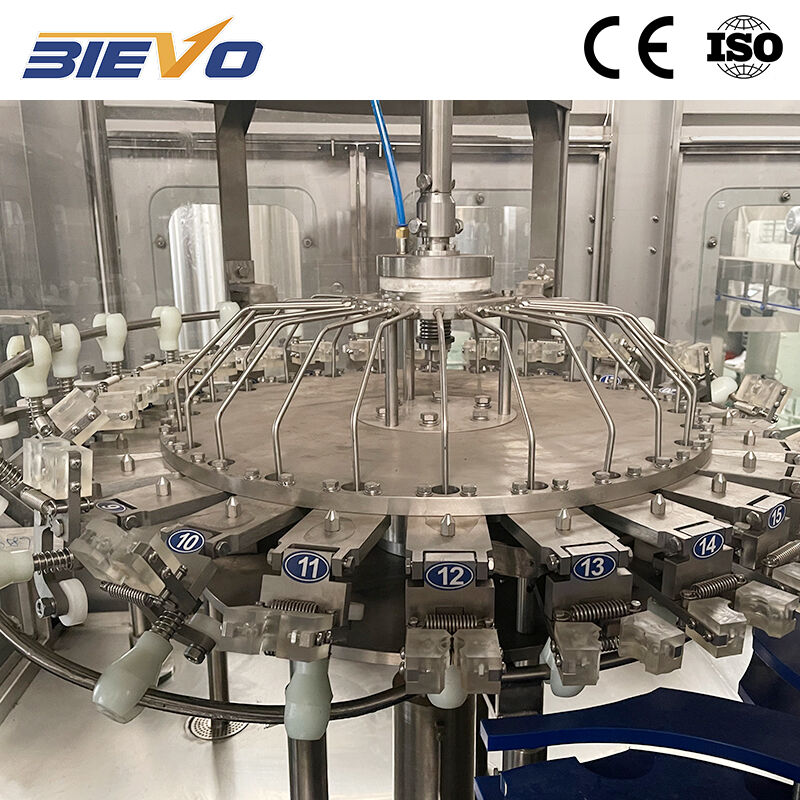
The Limitations of Standard Glass Bottle Filling Machines with Non-Standard Shapes
Standard glass bottle filling machines are engineered for consistency—relying on uniform geometry to maintain speed, accuracy, and reliability. When confronted with irregular containers—such as asymmetrical designs, curved bodies, or wide-mouthed vessels—their rigid architecture introduces three critical failure points:
- Positioning Instability: Irregular contours disrupt consistent orientation in conveyors and unscramblers, leading to misalignment before the fill station.
- Filling Head Incompatibility: Fixed-height nozzles cannot reliably seal against angled, tapered, or variable-height finishes—increasing spillage risk and fill-level variance. Industry data indicates defect rates can rise by up to 30% for non-standard geometries versus standard cylindrical bottles.
- Inspection Complexity: Vision systems calibrated for symmetrical profiles often miss fill inconsistencies or sealing flaws in uniquely shaped bottles, compromising quality assurance.
These constraints force manufacturers into a trade-off: manual intervention (sacrificing throughput and repeatability) or costly retrofits. Packaging efficiency studies show standard machines require up to 70% more downtime during format changes—eroding OEE in high-mix production environments where agility is essential.
Key Adaptive Technologies in a True Custom Glass Bottle Filling Machine
Advanced glass bottle filling machines overcome geometric variability through purpose-built engineering—not incremental upgrades. These systems integrate adaptive technologies that preserve precision while accommodating premium, non-standard glassware.
Modular Neck-Height Adjustment and Servo-Guided Chucking
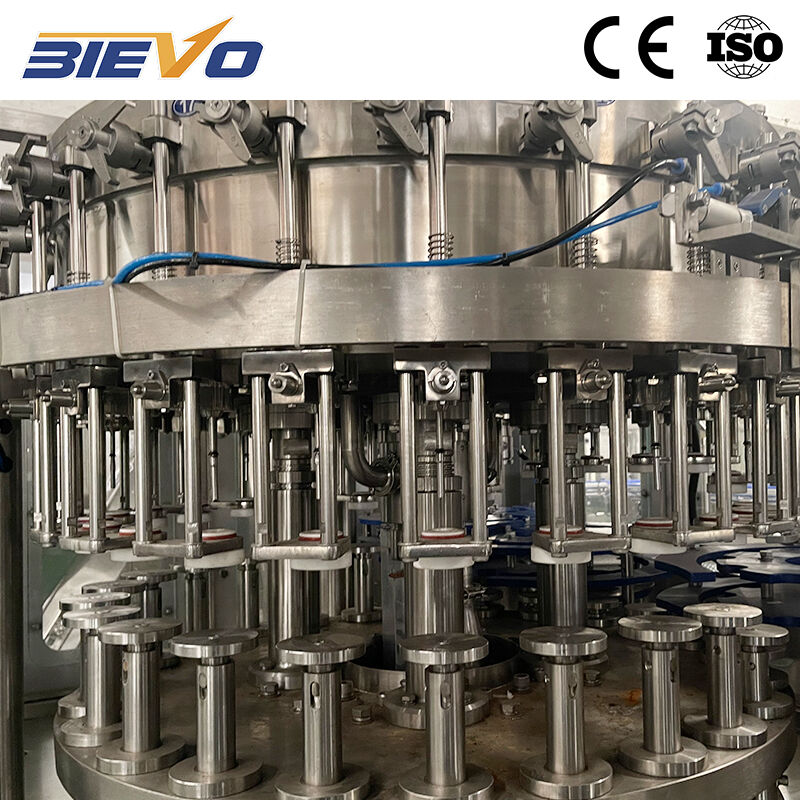
Modular neck-height mechanisms allow tool-free adjustments across diverse bottle dimensions—from delicate perfume flasks to wide-mouth jars—without mechanical recalibration. Integrated servo motors dynamically position filling nozzles with micron-level precision, automatically compensating for ±15mm height variations in real time. This closed-loop control ensures consistent seal integrity against curved, angled, or uneven necks while eliminating overflow risks. As a result, changeover time drops by 40% compared to manual reconfiguration, enabling rapid, accurate transitions between formats without interrupting fill accuracy.
Vision-Guided Multi-Sensor Bottle Recognition for Asymmetrical Geometry
Multi-sensor vision systems combine infrared scanning and high-resolution imaging to capture real-time 3D profiles of each container. Machine-learning algorithms analyze geometric anomalies—including hexagonal spirits bottles, hand-blown artisanal vessels, or contoured cosmetic packaging—to calculate optimal nozzle trajectory and dwell time. The system detects orientation errors exceeding 5° and auto-corrects alignment before filling begins, preventing spillage and ensuring consistent fill volume. Validated across unlimited variants, it delivers 99.8% detection accuracy at speeds exceeding 200 units/minute—making it indispensable for limited-edition luxury runs where dimensional uniformity cannot be assumed.
Selecting the Optimal Filling Mechanism for Glass Bottle Size, Shape, and Content
Gravity, Overflow, and Net-Weight Systems: Matching Technology to Thermal Mass and Neck Constraints
The choice of filling mechanism must account for both physical bottle characteristics—like neck diameter, wall curvature, and thermal mass—and product properties such as viscosity and temperature sensitivity. While gravity and overflow systems remain viable for standardized formats, net-weight filling emerges as the most robust solution for irregular glass containers.
Gravity filling works well for low-viscosity liquids (e.g., water, juice) in wide-neck, dimensionally stable bottles—delivering ±1–3% volumetric accuracy. Overflow systems excel when fill-level consistency is paramount, especially in narrow-neck bottles where minor height variances would otherwise cause visible level discrepancies; they achieve ±0.5–1% accuracy but are limited to lower-viscosity products. Net-weight filling, however, adapts inherently to asymmetry and thermal variability: by weighing each bottle pre- and post-fill, it dynamically compensates for container geometry, fill path resistance, and thermal expansion—achieving ±0.1–0.5% volumetric accuracy even with viscous oils or temperature-sensitive formulations.
| System | Accuracy | Best For | Constraints |
|---|---|---|---|
| Gravity | ±1–3% volume | Low-viscosity liquids, wide necks | Consistent bottle dimensions |
| Overflow | ±0.5–1% volume | Narrow necks, consistent fill levels | Limited viscosity range |
| Net-Weight | ±0.1–0.5% volume | Viscous liquids, irregular shapes | Slower throughput (30–120 BPM) |
For premium glass packaging—especially tapered, hand-finished, or thermally reactive containers—net-weight technology mitigates spillage, improves seal integrity, and supports compliance with stringent fill-volume regulations. A modular glass bottle filling machine integrates these mechanisms intelligently, selecting and calibrating the appropriate system based on real-time production audits and container metadata.
Operational Impact: Balancing Customization, OEE, and ROI in High-Mix Glass Packaging Lines
Deploying a custom glass bottle filling machine demands more than technical compatibility—it requires strategic alignment between flexibility, operational performance, and financial return. While adaptive systems unlock new capabilities for irregular and premium glassware, their implementation directly influences three core metrics:
- Overall Equipment Effectiveness (OEE) typically declines 12–18% during changeovers for non-standard containers, per packaging efficiency studies. Servo-guided tooling and vision-based recognition reduce this penalty significantly—cutting setup time by up to 40% and stabilizing uptime across mixed-batch runs.
- Return on Investment (ROI) timelines vary widely: full-line customizations may extend ROI horizons to 24 months, whereas modular, scalable systems shorten payback to 6–12 months. Partial automation—such as retrofitting net-weight fillers or adaptive chucking onto existing lines—recoups labor costs 60% faster than greenfield integrations.
- Hidden Costs, including specialized maintenance, operator retraining, and material waste from early-changeover trials, can absorb 15–30% of projected savings if not modeled upfront.
To secure sustainable ROI within 18 months, prioritize systems validated for <25-minute changeovers and >92% filler accuracy. Base decisions on scenario-based modeling that weighs labor efficiency, quality claim reduction, and throughput gains—not just capital cost. In high-mix environments, the strongest performers align mechanical adaptability with data-driven operational intelligence, turning geometric complexity from a constraint into a competitive advantage.
FAQ
1. Why do standard glass bottle filling machines struggle with non-standard shapes?
Standard machines are designed for uniform geometry which ensures consistency and reliability. Irregular shapes disrupt orientation and cause misalignments, increasing spillage risk and lowering accuracy.
2. What technologies are used in custom glass bottle filling machines?
Custom machines use modular neck-height adjustment, servo-guided chucking, and vision-guided multi-sensor bottle recognition to accommodate various shapes and ensure precise filling.
3. What are the benefits of net-weight filling systems?
Net-weight systems provide high accuracy and adaptability to irregular shapes by compensating for container geometry and thermal expansion, making them suitable for viscous or temperature-sensitive liquids.
4. How do these systems affect OEE and ROI?
Custom systems improve OEE by reducing changeover time and improve ROI by shortening payback periods and reducing labor costs compared to full-line customizations.
Table of Contents
- The Limitations of Standard Glass Bottle Filling Machines with Non-Standard Shapes
- Key Adaptive Technologies in a True Custom Glass Bottle Filling Machine
- Selecting the Optimal Filling Mechanism for Glass Bottle Size, Shape, and Content
- Operational Impact: Balancing Customization, OEE, and ROI in High-Mix Glass Packaging Lines
- FAQ