
Neglecting Daily Valve Seal Inspections and O-Ring Wear Profiles
Bottling shop floors often focus on high-level production schedules while overlooking minor fluid handling components that dictate liquid accuracy and fill levels. Filling nozzles, elastomeric seals, and internal valve seats endure continuous mechanical cycling under line pressure. When operating a high-speed water filling machine, slight seal degradation creates micro-leaks, atmospheric air entrainment, and erratic bottle fills. Maintenance personnel frequently assume seals last until visible liquid dripping occurs, but subtle pressure drops during spring-actuated opening cycles often show up much earlier. Rubber gaskets hardened by chemical sanitizers lose elasticity, causing misalignment against container necks during press-fill sequences. Regular inspections using digital durometers help identify seal hardening before unmetered liquid loss disrupts daily bottling quotas. Furthermore, replacing worn seals in complete sets across the entire rotary carousel prevents volumetric variations between adjacent filling heads.
Over-Torquing Mechanical Components and Conveyor Drive Assemblies
A widespread mistake among workshop technicians involves over-tightening fasteners and clamping collars during routine maintenance turnarounds. Excessive torque applied to rotary carousel star-wheels, bottle lift pedestals, or drive gears creates mechanical binding, accelerated bearing wear, and premature shaft fatigue. Machinery maintenance guidelines from the Packaging Machinery Manufacturers Institute specify torque limits for aluminum and stainless steel packaging hardware to prevent thread galling and structural distortion. Over-tensioning conveyor drive chains also exerts uneven radial loads on gearbox output shafts, driving up electrical motor draw and triggering thermal overloads. Using calibrated torque wrenches during mechanical adjustments prevents structural distortion while keeping rotary drive components moving smoothly. Establishing standardized torque checklists for every routine service procedure ensures consistency across different technician shifts.
- Calibrate pneumatic pressure regulators weekly to prevent excessive force on bottle elevation pedestals and centering cups.
- Apply specified thread-locking compounds rather than over-torquing bolts on high-vibration rotary filling carousels.
- Check drive chain slack monthly using straightedge gauges to maintain proper tension along bottle transfer channels.
|
Maintenance Practice |
Correct Operational Procedure |
Common Workshop Mistake |
Failure Impact on Equipment |
|
Valve Seal Replacement |
Scheduled swap based on operating hours |
Waiting for visible dripping |
Volume inaccuracy and air entrainment |
|
Fastener Torque Application |
Torque wrench set to manufacturer spec |
Over-tightening with impact tools |
Thread galling and shaft misalignment |
|
Clean-In-Place Sanitation |
Temperature and concentration monitoring |
Rushing flush cycles with high heat |
Seal degradation and scale buildup |
|
Drive Chain Lubrication |
Synthetic food-grade oil application |
Over-greasing or using thick grease |
Dust collection and chain stiffness |
Improper Clean-In-Place Protocol Execution and Chemical Residues
Rushing sanitation cycles or using incorrect chemical concentrations shortens machinery lifespan while compromising finished product purity. Clean-in-place routines require precise balance between chemical concentration, fluid velocity, contact time, and wash temperature. Exceeding recommended caustic soda concentrations or running acid flushes above 85 degrees Celsius degrades food-grade EPDM and fluoroelastomer seals inside fluid manifolds. According to technical bulletins published by the International Bottled Water Association, improper rinse velocity leaves chemical residues inside liquid channels, causing mineral scaling on flow sensors and valves. Regular conductivity checks of final rinse water verify complete chemical removal before restarting bottling runs. Installing automated concentration sensors inside clean-in-place return lines eliminates human error during chemical dosing cycles.
Field Case Study on Overtightened Lift Pedestals in East Africa
During a troubleshooting assignment at a mineral water plant in East Africa, maintenance engineers investigated chronic bottle tipping and fill volume variations on a thirty-two head rotary filler. Production logs revealed that technicians had recently replaced the lower guide bearings and tightened the central elevation clamping bolts with pneumatic impact wrenches. The excessive clamping force distorted the central column alignment shaft by less than one millimeter, but this micro-deviation caused binding in the bottle lift pedestals at high carousel speeds. Re-aligning the central elevation assembly, replacing scored guide bushings, and securing all clamping bolts with calibrated torque wrenches eliminated pedestal binding, restored fill height accuracy to within plus or minus one millimeter, and stopped container tipping across all shifts.
Misaligning Bottle Infeed Timing Screws and Transfer Star-Wheels
Improper mechanical synchronization between infeed timing screws, guide rails, and transfer star-wheels remains a primary cause of container scuffing and line jams. When adjusting star-wheel positions for different bottle sizes, technicians sometimes fail to verify pitch matching across the bottle neck grippers and main carousel pockets. A misalignment of just two millimeters at the infeed star-wheel forces bottles into the filling valves at an angle, placing lateral strain on lift cylinders and valve tips. Using alignment jigs and locking dowel pins during star-wheel changes ensures that containers enter the filling carousel perfectly centered under the nozzles, eliminating mechanical wear on bottle handling components. Conducting manual rotation tests prior to reconnecting main drive power protects star-wheel pockets from impact damage.
Integrating Preventive Protocols with Advanced Line Infrastructure
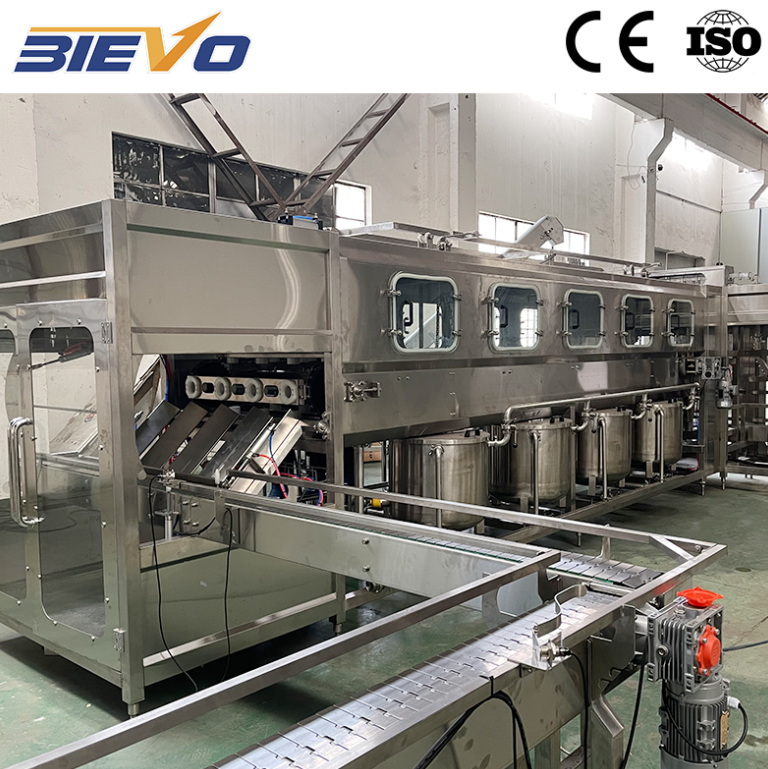
Long-term machinery reliability relies on structured preventive maintenance schedules, standardized operating procedures, and well-trained workshop technicians. Disconnects between electrical control diagnostics, mechanical maintenance logs, and sanitation routines lead to uncoordinated repairs that increase total downtime. Keeping detailed service records, monitoring vibration profiles on main drive motors, and maintaining clean compressed air supplies protect critical mechanical investments. Machinery manufacturing and line support from BIEVO combine durable stainless steel construction, precision machining standards, and global field support, giving beverage producers the foundation needed to achieve dependable production performance over years of operation.
Table of Contents
- Neglecting Daily Valve Seal Inspections and O-Ring Wear Profiles
- Over-Torquing Mechanical Components and Conveyor Drive Assemblies
- Improper Clean-In-Place Protocol Execution and Chemical Residues
- Field Case Study on Overtightened Lift Pedestals in East Africa
- Misaligning Bottle Infeed Timing Screws and Transfer Star-Wheels
- Integrating Preventive Protocols with Advanced Line Infrastructure