
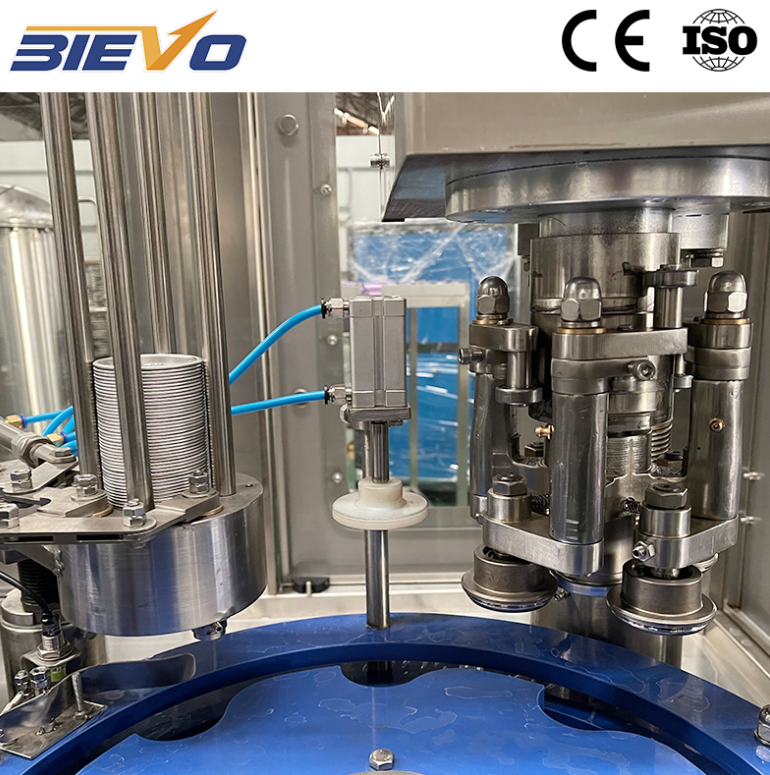
Start With a True Depressurization and Lockout Sequence
Cleaning a carbonated beverage filling machine safely begins before any chemical touches the bowl or valves. Carbonated systems hold pressure and dissolved CO2, so an idle line can still release gas or liquid when a clamp is opened. The correct sequence is mechanical isolation, lockout/tagout, pressure release through an approved vent, and confirmation with a gauge that reads zero. OSHA's confined space standard, 29 CFR 1910.146, applies when tanks or bowls require entry. Operators should wear face protection and chemical gloves, and confirm that CO2 venting will not create an oxygen-deficient pocket in a pit or low-lying area. Opening a sample valve before the main pressure source is isolated is a common mistake, and it can turn a short cleaning task into a safety incident.
Map the Soil Before Choosing Chemistry
Carbonated soft drinks leave a mixed soil: sugar, flavor compounds, color, preservatives, and carbonic acid. Sugar dries into a sticky film that can shield microbes, while acid and CO2 can attack some elastomers if cleaning chemistry is chosen carelessly. Before selecting a detergent, check the product matrix, water hardness, and materials of construction. A simple pre-rinse removes most loose sugar and reduces chemical demand. Warm water helps, but very hot water can set sugar films, so temperature needs a reason, not a habit. Alkaline detergent usually handles sugar and organic residue, while an acid step may be needed for mineral scale. Chlorine can attack stainless steel under some conditions, and quaternary ammonium can leave residues if rinsing is incomplete. The chemistry plan should come from a soil map, not a drum label.
Build a CIP Cycle Around TACT, Not Guesswork
Clean-in-place performance depends on four variables: time, action, concentration, and temperature, often called TACT. A cycle that looks long on paper can fail if flow bypasses a valve or if detergent is below the effective temperature. A cycle that looks short can work if the circuit drains well and flow velocity reaches wetted surfaces. 3-A Sanitary Standards and EHEDG design guidance emphasize accessible surfaces, drainability, and validated cleaning parameters. Those principles matter more than a generic recipe. The table below shows typical control ranges for a carbonated beverage filling machine, but plant validation should override any generic number.
|
Cleaning stage |
Typical control range |
Main risk |
Verification check |
|
Pre-rinse |
Ambient to 50 C, until runoff is clear |
Sugar carryover neutralizes detergent |
Conductivity and visual runoff |
|
Alkaline wash |
1 to 3 percent caustic, 70 to 80 C, 15 to 30 minutes |
Short contact time or low flow leaves biofilm |
Titration, temperature log, flow switch |
|
Acid wash |
0.5 to 2 percent acid, 60 to 70 C, 10 to 20 minutes |
Scale control missed in hard water |
Titration and rinse conductivity |
|
Sanitizer |
Per label, often 100 to 200 ppm PAA, 5 to 15 minutes |
Residual chemical or wet surfaces |
Titration and rinse conductivity |
|
Final rinse |
Potable water quality, near neutral pH |
Rinse water recontaminates clean surfaces |
Conductivity, pH, ATP |
Protect the Filling Valves and CO2 Circuits During Cleaning
Filling valves are the most delicate part of the cleaning circuit. Their small passages and seals can trap product or cleaning solution. If the CIP circuit sends full flow through every valve at once, some valves may see low flow while others see too much pressure. Sequence valve groups and confirm that each valve opens fully during its cleaning window. CO2 circuits need separate attention. Cleaning solution must not migrate into gas lines, regulators, or the carbonation system. Check valves and double block and bleed arrangements are the barrier between cleaning chemistry and the gas path. During a retrofit at a beverage plant in southern China, the maintenance team found a dead leg behind a manual sample valve. Rinse water looked clean at the tank outlet, but ATP swabs from two filler valves kept failing. Adding a flush point and extending valve-specific cleaning time solved the problem without increasing caustic concentration. That case shows why valve-level verification matters more than a single tank reading.
Verify Cleanliness With Data, Not Appearance
A shiny stainless surface is not a cleaning result. Verification should combine visual inspection, ATP swabs, and, where appropriate, micro counts or allergen tests. ATP is fast and useful for trend monitoring, but the pass threshold must be set for the site and surface. A reading that passes on a tank wall may fail on a valve seat. Rinse water conductivity and pH check chemical residue, but they do not prove microbial control. FDA's Current Good Manufacturing Practice guidance under 21 CFR 117 expects sanitation controls to be monitored and verified, not assumed. Records should show actual concentration, temperature, flow, and contact time for each cycle. When a deviation occurs, the response should identify the failed parameter and corrective action.
Close the Loop With Rinse Water and Change Control
Final rinse water quality can undo an otherwise good cleaning cycle. Hard water can leave mineral film, and water with high microbial counts can recontaminate surfaces after sanitizing. A final rinse should meet potable water standards and be monitored for conductivity, pH, and microbial quality on a schedule. Change control matters too. A new flavor, bottle shape, or detergent supplier can alter cleaning performance. Small changes should trigger a review of contact time, temperature, and verification results. Cleaning procedures should be written for the actual line configuration, not copied from a different plant. For beverage producers comparing equipment options, BIEVO brings over 30 years of filling and packaging manufacturing experience, a 7,000 m² production base, and a global service network that supports plant layout, installation, commissioning, and technical follow-up. Good cleaning starts with good equipment design and continues with disciplined operation.