
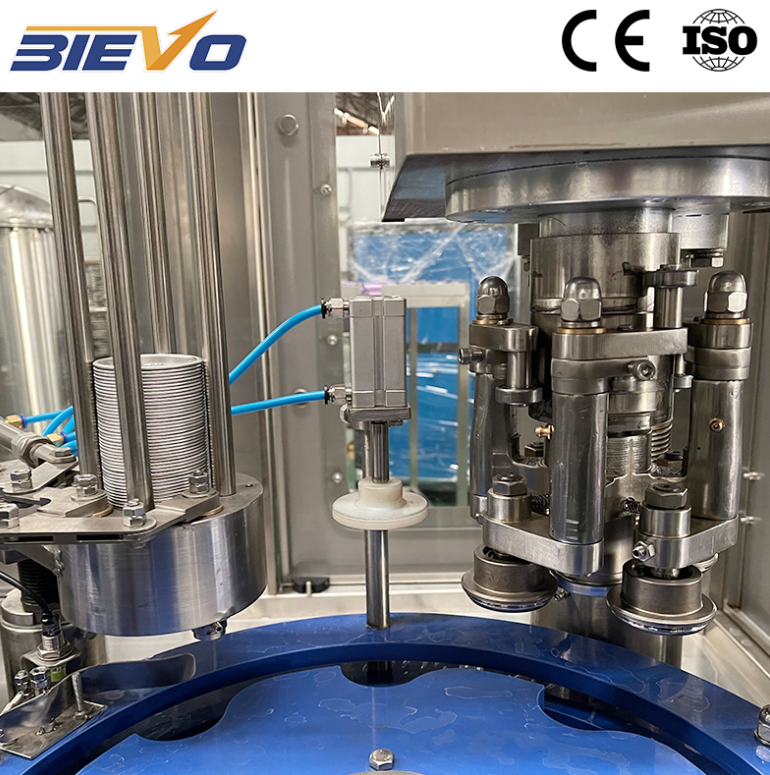
Efficiency Starts With Stable Counter-Pressure Filling
A carbonated beverage filling machine does not create efficiency by running fast alone. It earns it by holding a stable counter-pressure at every filling valve while bottles arrive with consistent alignment and temperature. In isobaric filling, product and gas share a pressurized path, so the fill level depends on pressure balance, valve timing, and the condition of seals. When that balance drifts, operators chase foam, short fills, and rework. An automatic machine closes that loop with synchronized valve actuation, bottle neck handling, and recipe-driven pressure settings. The gain is not one dramatic speed number. It is fewer micro-stops, steadier fill heights, and less manual adjustment between batches. That is where efficiency actually shows up on a shift report.
Foam Control Is a Production Decision, Not a Cosmetic Issue
Foam is the visible symptom of a process that is out of balance. Warm product, low CO2 pressure, rough bottle handling, or a worn filling valve can all create foam at the filler head. Foam costs money in three ways: product loss, rejected bottles, and time spent cleaning sensors and conveyor surfaces. Automatic carbonated filling lines address foam through controlled back pressure, smooth bottle transfer, and valve designs that reduce turbulence. Product temperature also matters because CO2 solubility falls as temperature rises, so a small chilling deviation can change the whole filling window. The table below gives a practical comparison of line types, not a promise for every plant.
|
Factor |
Manual or semi-automatic filling |
Automatic carbonated filling |
What it means on the floor |
|
Fill consistency |
Depends on operator timing and valve condition |
Recipe-driven pressure and valve timing |
Fewer short fills and overfills |
|
Foam control |
Reactive, often adjusted by hand |
Counter-pressure and transfer stability |
Less product loss and fewer rejects |
|
Changeover |
Manual settings and trial bottles |
Stored recipes and repeatable positions |
Shorter startup windows |
|
Labor use |
Constant attention at the filler |
Monitoring and exception handling |
Operators move to verification tasks |
|
Data capture |
Paper notes, if any |
Cycle, alarm, and parameter logs |
Faster root cause checks |
Changeover Time Quietly Eats the Gains
A filler can look impressive during a single-product run and still lose hours every week at changeover. Carbonated lines often switch among flavors, bottle sizes, and label designs. Each switch brings pressure settings, fill height, capping torque, and conveyor guides into play. Automation helps when recipes are stored and recalled by product code, not when every change depends on a technician's memory. Three practical checks matter:
Confirm that recipe recall covers pressure, fill time, and capping parameters together.
Check whether change parts can be swapped without special tools and without bypassing safety interlocks.
Verify that the first bottles after changeover go through a defined release check, not a quick visual glance.
A line that starts up clean and repeatable is worth more than a line with a higher brochure speed that needs twenty minutes of fiddling after every switch.
Data and CIP Discipline Keep the Line Honest
Efficiency claims fade when cleaning and sanitation are treated as downtime. In carbonated operations, the filler, valves, and product lines must be cleaned on a validated schedule. 3-A Sanitary Standards and EHEDG design guidance emphasize cleanable surfaces, drainability, and verified cleaning parameters. An automatic machine supports that discipline through cycle logs, alarm history, and repeatable CIP sequences. When a rinse step is skipped or a valve does not open fully, the record shows it. That matters because a clean line runs with fewer unexpected stops and fewer quality holds. Data does not replace a skilled operator, but it gives the operator something solid to work with.
Where Automation Pays Back and Where It Does Not
Automation is not a universal answer. It fits plants with repeatable bottle formats, steady demand, and enough technical support to maintain seals, sensors, and valve components. It is a weaker fit for very small batches, highly variable containers, or operations without reliable utilities and spare parts. A realistic payback review should include labor, product loss, rejects, changeover time, and maintenance skill. At a soft drink plant in southern China, a retrofit team found that repeat foam rejects were not caused by the filler speed setting. The real issue was inconsistent counter-pressure on two valve groups and a warm product surge after changeover. Adding automatic pressure compensation and a recipe-based startup sequence reduced manual intervention, but the plant still had to fix the chiller control and valve maintenance schedule. Automation helped, yet it did not excuse the basics.
Matching the Machine to the Plant, Not the Brochure
The right automatic carbonated beverage filling machine should match the plant's bottle range, product temperature window, cleaning routine, and maintenance capability. Buyers should ask for valve-level fill trials, a clear changeover demonstration, and a CIP sequence that fits the actual piping layout. A machine that cannot be cleaned and maintained well will not deliver efficiency, no matter how fast it runs. BIEVO brings more than 30 years of beverage filling and packaging manufacturing experience, a 7,000 m² production base, and global service support for layout, installation, commissioning, and technical follow-up. The practical choice is the line that keeps pressure stable, changeovers repeatable, and cleaning verifiable shift after shift.