
Fill Principle Matters More Than the Steel Frame
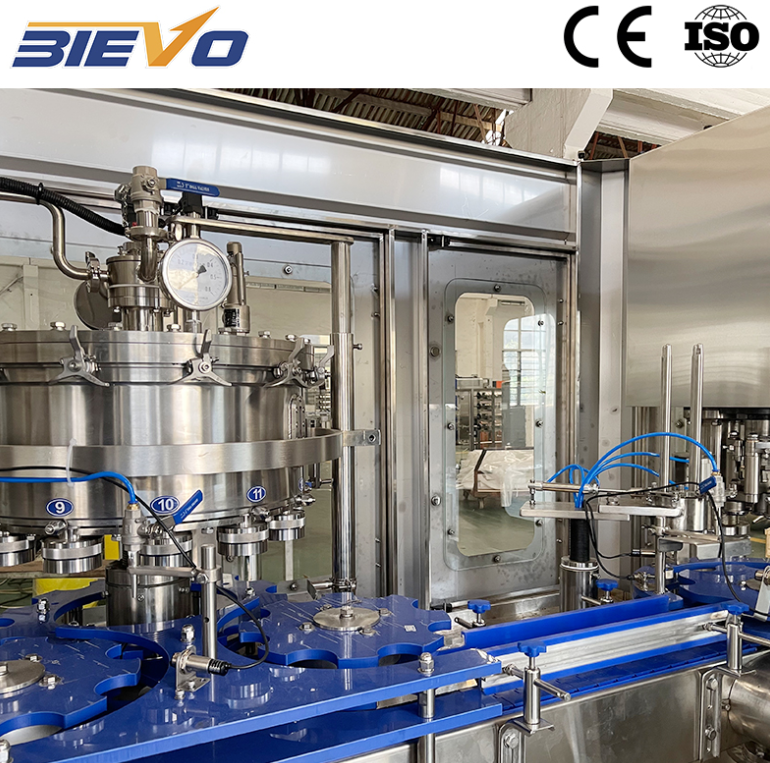
Walk into a beverage plant and every can filling machine looks like a stainless turret with cans spinning around. The useful difference is inside the fill cycle. A can filling machine is usually classified by how product enters the can: counter-pressure, gravity or level, volumetric piston, flow-meter, and sometimes weighing. Frame size, head count, and automation level matter, but fill principle decides which products fit, which accuracy levers exist, and which cleaning routine is needed. A line built for still water will not handle a foaming cola just because the conveyor speed is lowered. The machine type has to match dissolved gas, viscosity, pulp, temperature, and target net content. That is the first filter before budget and footprint.
Counter-Pressure Filling for Carbonated and Oxygen-Sensitive Cans
Counter-pressure, also called isobaric filling, pressurizes the can with CO2 or sterile air before product flows. The bowl and can reach similar pressure, so the product does not flash off gas during fill. This is the standard route for carbonated soft drinks, beer, and some sparkling teas. A pressure relief step after filling controls foam before seaming. The trade-off is complexity: seals, pressure controls, and CO2 quality all affect performance. If the pressure window is loose, fill height will wander and foaming will rise. Counter-pressure machines are less forgiving of poor can seating than gravity fillers. They also need careful CIP and seal inspection. For products with low carbonation or high pulp, this type can still work, but the recipe and valve design need review. It is not a universal answer.
Gravity and Level Filling for Still Beverages
Gravity fillers use a product bowl above the valve and let liquid fall into the can until a vent tube or level sensor stops the flow. Level filling is simple, gentle on particles, and easy to clean. It suits still water, some juices, teas, and edible oils where foam is low. The catch is that fill weight depends on product density and can geometry. A level filler controls volume by headspace, not by grams. If the can specification changes, the net content can shift even when the level looks right. Gravity systems also struggle with viscous products and with foamy recipes. They are often the lowest cost option, but the hidden cost is tighter can tolerances and more frequent weight checks. For a plant running several still products with similar density, level filling can be a practical workhorse.
Volumetric and Flow-Meter Filling for Recipe Flexibility
Volumetric piston fillers measure a fixed volume in a cylinder and push it into the can. Flow-meter fillers count product through a meter and stop at a set volume or mass. Both handle a wider viscosity range than gravity, and both can run recipes with different target fills. The piston type is common for pulpy juices, sauces, and some dairy drinks. Flow-meter systems are common where changeovers are frequent and traceability matters. Accuracy depends on air elimination, meter calibration, and product temperature. A meter that is accurate on water can drift on a 12 Brix juice if the recipe compensation is wrong. These systems also cost more and need trained maintenance. They are strong choices when one line must run many products, but they are not automatically more accurate than a well tuned level filler.
Rotary, Linear, and Monoblock Layouts Change the Footprint
The fill principle is only half the story. Machine layout affects speed, floor space, and how cans move between rinse, fill, and seam. Rotary fillers use a carousel and are common in medium to high output lines. Linear fillers move cans in a straight line and suit smaller batches or limited space. Monoblock designs combine rinser, filler, and seamer in one frame with a single drive and enclosure. That reduces transfer points and can improve hygiene control, but it also means one fault stops the whole block. A compact monoblock is not always the best fit for a plant that needs independent maintenance windows. Layout choices should follow the product mix and the available utility space, not just the headline output.
|
Type |
Best fit |
Strength |
Watch-outs |
|
Counter-pressure |
Carbonated drinks, beer, sparkling tea |
Keeps dissolved gas in solution |
Seal wear, pressure control, foam management |
|
Gravity or level |
Still water, clear juice, tea, oil |
Gentle, simple, easy to clean |
Density and can tolerance affect net content |
|
Volumetric piston |
Pulpy juice, sauces, dairy drinks |
Handles viscosity and particles |
Air entrapment, cylinder wear, changeover setup |
|
Flow-meter |
Multi-product lines with frequent changeovers |
Recipe flexibility and data traceability |
Calibration drift, temperature compensation |
|
Weighing |
High value products and tight net content |
Direct mass control |
Cycle time, load cell mounting, vibration |
What Really Matters When Choosing a Type
A useful selection process starts with the product, not the brochure. List dissolved CO2, viscosity, pulp size, fill temperature, target net content, and cleaning chemistry. Then check the can spec and seam window. During a line upgrade at a juice and tea plant in Southeast Asia, the existing level filler was blamed for short fills. The real issue was a new can supplier with a slightly different flange height. The level looked correct, but net content moved. A change to the can spec and a revised vent tube setting solved most of it. That case shows why machine type and container tolerance must be reviewed together. For net content control, OIML R87 is a useful reference for prepackaged product errors, though it does not replace a plant's own sampling plan. The honest limitation is that no fill type fixes a poor can or an unstable product temperature.
BIEVO has spent decades building filling and packaging machinery for beverage producers, with in house machining, broad line configurations, and service support across Asia, Africa, the Middle East, and South America. That matters when a can filling machine has to fit an existing conveyor, a new can spec, and a realistic maintenance plan. The right type matches the product and the plant, not the longest feature list.
Table of Contents
- Fill Principle Matters More Than the Steel Frame
- Counter-Pressure Filling for Carbonated and Oxygen-Sensitive Cans
- Gravity and Level Filling for Still Beverages
- Volumetric and Flow-Meter Filling for Recipe Flexibility
- Rotary, Linear, and Monoblock Layouts Change the Footprint
- What Really Matters When Choosing a Type