
Understanding How Glass Bottle Compatibility Actually Works
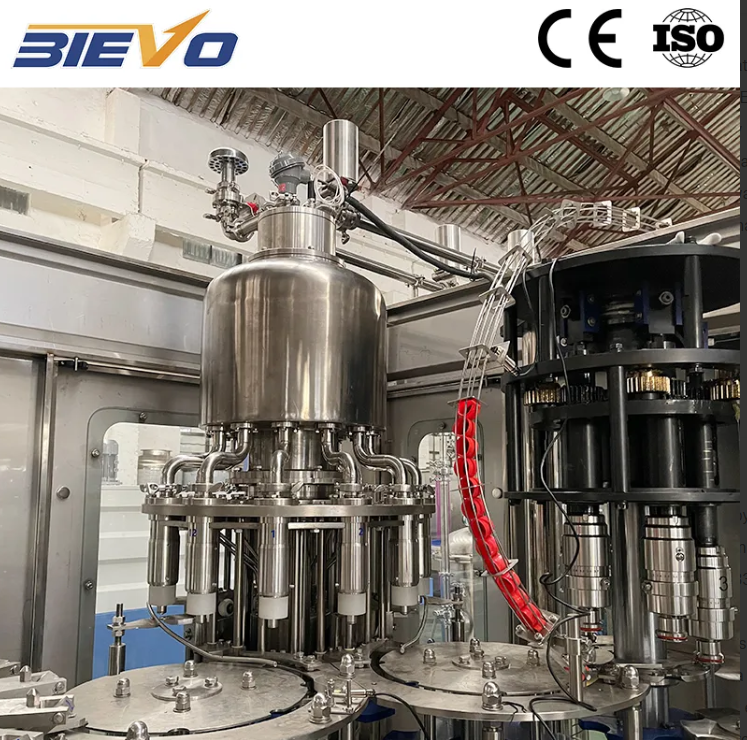
Glass bottles are not all the same creature. A brewer running a small batch of amber growlers faces completely different filling conditions than a sauce producer packing 500 ml clear flint bottles at high speed. The glass itself, the neck finish, the internal coating, and even the way the bottle was annealed all influence how a glass bottle filling machine interacts with the container. Experienced line engineers tend to look at three things first: the glass type, the bottle geometry, and the closure system. Type III soda-lime glass remains the workhorse for beverages, oils, and sauces because it handles thermal shock reasonably well and does not require exotic handling. Borosilicate glass, by contrast, shows up in pharmaceutical or laboratory settings where chemical resistance matters more than line speed. The filling machine itself rarely cares about the chemistry, but the filling valves, centering bells, and rinse stations absolutely respond to dimensional consistency.
Why Bottle Geometry Influences Filling Accuracy More Than People Expect
A tall, narrow 375 ml bottle behaves differently on a rotary filler than a squat 1 liter jar. The height-to-diameter ratio changes how foam settles, how CO2 purges, and how stable the bottle sits under the filling nozzle. In one retrofit project at a juice facility in Southeast Asia, a switch from a 28 mm neck finish to a 38 mm finish on the same 500 ml body cut splashing dramatically. The wider opening allowed faster product flow without turbulence. That single change improved fill level consistency by roughly 18 percent across an eight-hour shift, based on the plant's own quality logs. The lesson here is simple: a glass bottle filling machine is not just a pump and a valve. It is a system that responds to the container's physical profile. Bottles with pronounced shoulders tend to trap air, which is manageable with a good vent tube design but problematic on older gravity fillers. Straight-walled bottles are far more forgiving.
Matching Glass Type to Product Category
Different products demand different glass characteristics. Carbonated beverages need bottles that can hold internal pressure, which usually means heavier sidewalls and a champagne-style base. Still water and juices can use lighter glass. Edible oils often go into dark green or amber glass to slow UV degradation. Here is a quick reference showing how common glass types pair with typical filling applications:
|
Glass Type |
Common Products |
Key Property |
Filling Consideration |
|
Type III Soda-Lime |
Beer, juice, sauces |
Good thermal shock resistance |
Standard valves work well |
|
Amber Glass |
Beer, oils, pharmaceuticals |
Blocks UV light |
Slightly higher cost, same handling |
|
Flint (Clear) Glass |
Water, white spirits, vinegar |
Visual product display |
Requires clean, scratch-free surface |
|
Borosilicate |
Lab reagents, specialty chemicals |
High chemical durability |
Low-volume production typical |
|
Recycled Glass Blends |
Eco-focused beverage lines |
Variable composition |
Tighter incoming QC needed |
Recycled content glass deserves a special mention. Post-consumer cullet can shift the melting temperature and sometimes leaves micro-inclusions in the bottle wall. A glass bottle filling machine will not reject these defects on its own. The inspection system upstream has to catch them before filling.
The Thermal Factor That Quietly Controls Fill Performance
Filling temperature is not only about the product. It is also about the bottle. Cold glass hitting hot liquid creates thermal stress, and if the temperature differential exceeds roughly 40 to 45 degrees Celsius, micro-cracks can appear near the heel or the neck. This is why many hot-fill lines for sauces and teas run bottles through a pre-warming tunnel. The process is not about pasteurizing the bottle. It is about preventing sudden expansion. A line producing pasta sauce in glass jars learned this the hard way when winter morning production runs showed a spike in leaker rates. The jars sat overnight in an unheated warehouse, then hit an 82 degree Celsius filler. After installing a simple warm water rinse station before the filler, the defect rate dropped back to baseline. Thermal management in a glass bottle filling machine environment is mostly about consistency.
Closure Compatibility and Its Ripple Effects
The closure matters as much as the glass. Crown caps, lug caps, twist-off lids, and cork finishes all place different demands on the filler's discharge and capping sequence. A bottle destined for a pressure-sensitive liner needs a clean, dry sealing surface. Overflow fillers that leave product residue on the neck can compromise cap torque and seal integrity. Vacuum levels inside the headspace also shift depending on closure type. Hot-filled products with lug caps rely on vacuum formation during cooling, which means the filler must leave a precise headspace. If the fill level is too high or too low, the vacuum is wrong and the cap pops or the product oxidizes. The best approach is to treat the bottle, the closure, and the glass bottle filling machine as one connected engineering system rather than three separate purchasing decisions.
What to Look for Before Buying or Retrofitting
Any serious evaluation should start with a dimensional audit of the actual bottles that will run on the line, not just the specification sheet. Measure neck finish, height, diameter, wall thickness distribution, and base profile across at least 50 samples from different production batches. Then test fill performance at the intended product temperature. This kind of upfront work catches problems that catalog specifications miss. BIEVO has built its filling line business around this practical mindset. The company's manufacturing floor includes dedicated test areas where customers can validate bottle and product combinations before committing to a full line, which reduces downstream integration risk. With over three decades in beverage packaging equipment and a global install base across more than 100 customer sites, BIEVO brings the kind of application knowledge that only comes from seeing a lot of different bottles, closures, and products run through real production environments.
Table of Contents
- Understanding How Glass Bottle Compatibility Actually Works
- Why Bottle Geometry Influences Filling Accuracy More Than People Expect
- Matching Glass Type to Product Category
- The Thermal Factor That Quietly Controls Fill Performance
- Closure Compatibility and Its Ripple Effects
- What to Look for Before Buying or Retrofitting