
Start With a Cold, Honest Look at the Bottle Path
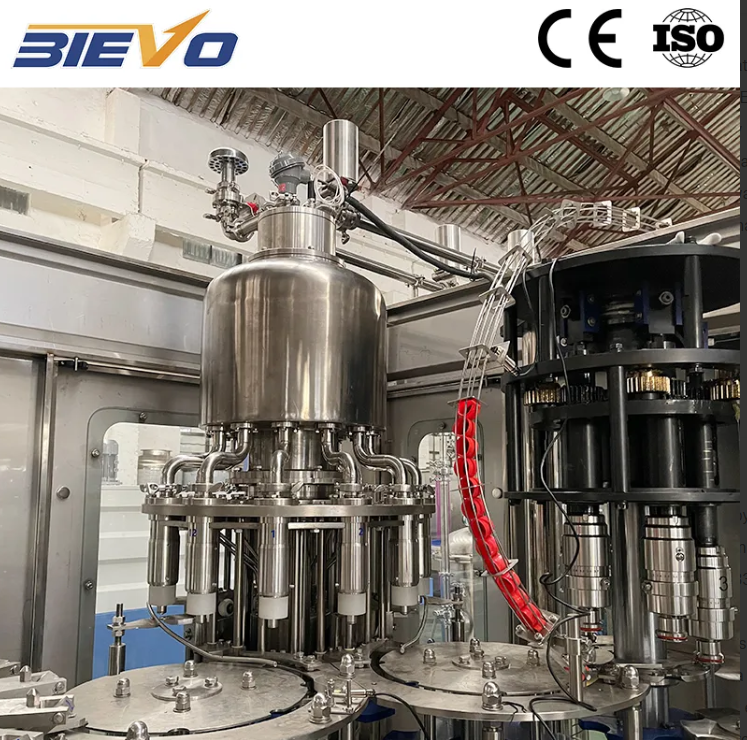
Most stability problems on a glass bottle filling machine start before the first drop of liquid enters the bottle. The infeed worm, star wheel pockets, and guide rails decide whether each bottle arrives straight and calm at the fill valve. If a star wheel pocket is worn into an oval, the bottle wobbles at the transfer point. The fill valve may still seal, but the neck takes extra stress and fill levels drift. Before startup, walk the line and look for glass dust near the transfer stars. That dust is a clear sign that bottles are hitting something harder than they should. Replacing a worn star wheel is cheaper than chasing phantom fill errors for a week.
Set the Filler Bowl Pressure and Valve Timing Before Anything Else
Glass does not forgive pressure swings. For still water or juice, keep the filler bowl pressure steady between 0.2 and 0.5 bar. For carbonated products, pressure has to sit higher, often between 1.5 and 2.5 bar at filling temperature, to keep CO2 in solution. A swing of just 0.1 bar can move fill height enough to trigger a weight check rejection. Valve timing matters just as much. The cam that opens and closes the fill valve must be verified against actual bottle position, not against a saved recipe from another glass bottle shape. Run ten bottles with water and mark where filling starts on the shoulder. If the mark changes, the timing is drifting.
Why Bottle Temperature Shock Causes More Micro-Cracks Than People Think
A cold glass bottle from a warehouse can be 5°C. If the product inside is 25°C, the inner surface expands faster than the outer surface. The result is not always a visible break. Small micro-cracks often form near the heel or shoulder. Those cracks grow with repeated pressure cycles, and the bottle can fail later during pasteurization or on a store shelf. Many plants keep the bottle temperature within 20°C of the product temperature. If the gap is larger, use a warm water pre-rinse or let pallets sit in the filling hall for a few hours. This step prevents hidden defects more than immediate breakage.
A Real Plant Lesson From a Sticky Peach Tea Line
During a line audit at a beverage plant in South China, a glass bottling line for peach tea kept losing fill accuracy after lunch. The maintenance team suspected the filler, but the real problem sat in the CIP return line. A small pocket of peach tea residue had dried inside the fill valve manifold because the afternoon rinse was shortened to save time. That sticky layer changed how the valve seated, and fill volume drifted by up to 12 ml per bottle. The fix was simple: restore the full rinse cycle and replace two valve seals. After that, the drift disappeared. Stability on a glass bottle filling machine is rarely about one big adjustment. It is about small residues and small shortcuts that build up over a shift.
|
Parameter |
Typical Stable Range for Glass Lines |
What Happens When It Drifts |
|
Filler bowl pressure, still products |
0.2 to 0.5 bar |
Fill level variation, splashing |
|
Filler bowl pressure, carbonated products |
1.5 to 2.5 bar |
Foaming, underfills, CO2 breakout |
|
Bottle temperature before filling |
Within 20°C of product temperature |
Thermal shock, micro-cracks |
|
Star wheel transfer clearance |
1 to 2 mm per side |
Neck damage, jam-ups, glass dust |
|
Fill valve seal condition |
No visible cuts, no sticky residue |
Dripping, volume drift, sanitation risk |
The Cleaning Routine That Keeps Fill Accuracy From Drifting
Cleaning procedures need to be specific about time, temperature, and flow rate. A rinse that is too short removes sugar but leaves mineral scale. A rinse that is too hot can damage seals or cause thermal expansion in stainless parts. The U.S. Food and Drug Administration's cGMP guidance for bottled beverages stresses that cleaning validation should include visual inspection of product contact surfaces, not just a timer on the CIP system. Check fill valve tips at least once per shift. Look for sticky film, cracks in the sealing washer, or mineral deposits around the vent tube. If the product has pulp or fiber, inspect the bowl screen more often. A partly blocked screen changes flow into the bowl, and fill consistency suffers long before a full blockage.
Bring the Whole Team Into the Stability Loop
The most stable glass lines share one habit: operators, quality lab staff, and maintenance crews look at the same numbers every day. Fill level standard deviation, bottle breakage count, and filler stop reasons should be visible on a board near the line. If the lab sees a rising deviation, the operator checks bowl pressure and valve timing. If maintenance notices repeated star wheel adjustments, they inspect the infeed worm for wear. A simple log sheet with three columns works better than waiting for a breakdown. A glass bottle filling machine holds its stability when people respond to early signals instead of chasing failures.
BIEVO, a manufacturer with over 30 years in beverage filling and packaging machinery, designs its glass bottle filling systems around stable mechanics, clean process design, and clear operating data. With a 7,000 m² production facility and more than 50 patented technologies, BIEVO supplies complete glass bottling lines engineered for practical, day-to-day reliability. That background matters when a line has to run glass containers shift after shift without surprises.
Table of Contents
- Start With a Cold, Honest Look at the Bottle Path
- Set the Filler Bowl Pressure and Valve Timing Before Anything Else
- Why Bottle Temperature Shock Causes More Micro-Cracks Than People Think
- A Real Plant Lesson From a Sticky Peach Tea Line
- The Cleaning Routine That Keeps Fill Accuracy From Drifting
- Bring the Whole Team Into the Stability Loop