
Why Glass Speaks a Different Language Than Other Packaging
Glass carries a weight that goes far beyond its physical mass. When a consumer picks up a glass bottle, the heft, the clarity, and the cold touch of the surface send a signal that no plastic or aluminum can replicate. This is not marketing fluff. It is a sensory reality that beverage brands in the premium segment have understood for decades. A spirit, a craft soda, or a cold pressed juice simply feels more valuable in glass. The material also happens to be chemically inert. Unlike some plastics that can interact with acidic or alcohol heavy formulations over time, glass just sits there, doing nothing to the liquid inside. That means the flavor profile a master blender or formulator worked to create stays exactly as intended from bottling day through to the moment of consumption. For any producer positioning a product at the high end of the market, these intrinsic material properties are the baseline. The question then becomes how to fill that glass container at production speed without compromising the very qualities that make it special.
The Chemistry of Inertness and Flavor Integrity
The technical argument for glass starts with its molecular structure. Glass is an amorphous solid, essentially a supercooled liquid frozen in place, with an extremely tight atomic network. Flavor compounds, essential oils, and volatile aromatics cannot migrate into the container wall because there is simply no space for them. PET and other plastics, by contrast, have polymer chains with free volume between them. Over weeks and months, oxygen can slowly creep in from the outside while delicate citrus notes or hop volatiles can sneak out. The same barrier property that keeps carbonation locked in a beer bottle also prevents off flavors from leaching into a premium juice blend. An independent study published by the Journal of the Science of Food and Agriculture examined flavor stability in glass versus multilayer PET across a six month shelf life. The glass packaged samples showed measurably lower losses of key aroma compounds like limonene and ethyl butyrate, the molecules behind citrus and fruity notes. For a beverage maker charging a premium price, that data point matters. It validates the packaging decision with chemistry, not just tradition.
The Filling Technology That Handles Fragile Containers at Speed
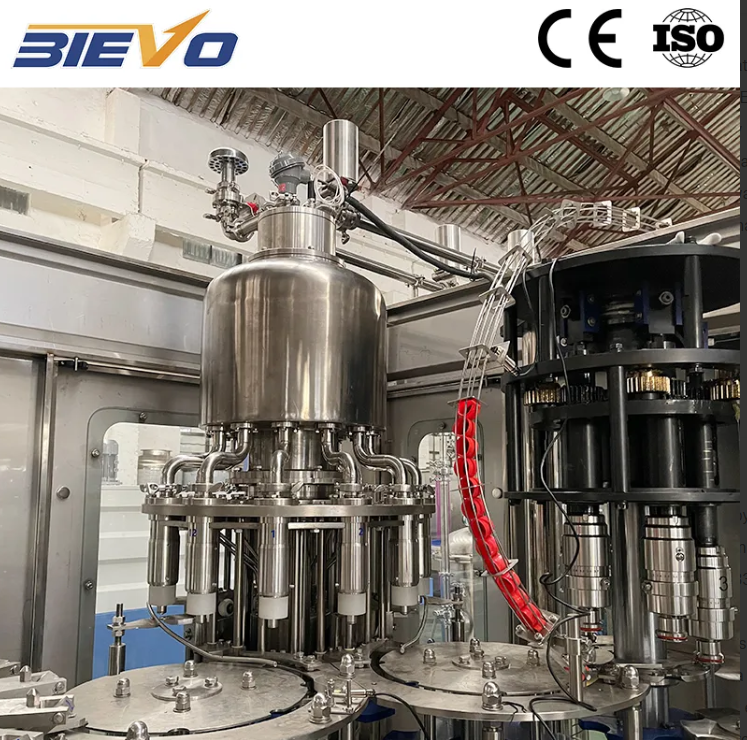
Filling glass bottles at production speed introduces a set of mechanical challenges that simply do not exist with aluminum cans or flexible pouches. Glass breaks. It chips. It cracks under thermal shock if the product temperature and the bottle temperature are too far apart. A glass bottle filling machine designed for premium applications must manage these risks while maintaining the throughput numbers a business needs. Modern gravity fillers and counter pressure fillers used for glass handle this through precise container handling. Bottles move through the filler on neck guided tracks or base guided conveyors with minimal side load. Filling valves engage gently, using centering bells that align the bottle mouth without slamming into it. The fill itself happens under a laminar flow regime that minimizes splashing and turbulence, because foam or agitation in a narrow neck bottle can cause overflow or inconsistent fill levels. Some systems also incorporate pre evacuation or inert gas flushing for oxygen sensitive products like wines or craft spirits. Each station operates independently, so a bottle that fails to load or breaks on entry gets bypassed without stopping the entire rotary carousel.
The Visual Audit That Happens on Every Shelf
A premium beverage in a glass bottle undergoes constant inspection, not just from quality control staff but from every consumer who glances at the shelf. The transparency of the material means any fill level inconsistency, any floating particle, any haze or sediment becomes instantly visible. This is both a challenge and an opportunity. It forces tighter process control throughout the filling and capping sequence. But it also allows a brand to showcase the product. A layered cocktail with distinct color bands, a craft soda packed with real fruit pulp, or a sparkling water that catches light through a ribbed bottle design all use the glass itself as a display medium. Achieving that flawless visual presentation requires the filling machine to deliver not just the correct volume but also clean cutoff without drips or smears on the bottle finish. Drip free valve nozzles, properly timed snift operations, and a smooth bottle discharge onto the conveyor all contribute. When the closure is applied immediately after filling, there is no window for airborne contaminants to enter.
|
Glass Container Filling Feature |
Benefit for Premium Products |
Potential Issue If Neglected |
|
Laminar fill flow with minimal turbulence |
Preserves dissolved gas and prevents flavor compound stripping |
Foam overflow or aroma loss during bottling |
|
Inert gas pre flush or evacuation |
Extends shelf life by reducing dissolved oxygen pickup |
Oxidative flavor degradation within weeks |
|
Gentle centering bell engagement |
Eliminates glass chipping and micro fractures at the bottle mouth |
Container breakage and micro glass particle contamination |
|
Drip free valve cutoff |
Keeps bottle exterior and closure threads clean |
Mold growth or label adhesion failure in storage |
|
Independent valve actuation |
Adapts fill timing to each bottle without slowing the carousel |
Uneven fills across the production batch |
The Supply Chain Realities Nobody Talks About
Glass bottles are heavy. A truckload of empty glass weighs dramatically more than the equivalent volume of empty aluminum cans or PET preforms. This has obvious freight cost implications for the inbound packaging material. More importantly, it shapes how a filling line should be laid out. A depalletizer that strips empty bottles from a pallet and feeds them into the line must handle significant inertia. Conveyor motors, corner wear strips, and lane dividers all experience higher mechanical loads than they would on a can line. These are not reasons to avoid glass. They are simply engineering parameters that need to be accounted for at the plant design stage. The same applies to downstream handling. Filled glass bottles entering a pasteurizer or a warm labeling station must be heated and cooled gradually to prevent thermal shock. A temperature differential above roughly 25 degrees Celsius between the bottle and the sprayed water can cause sudden cracking. Tunnel pasteurizers designed for glass lines incorporate multiple temperature zones with gentle ramping specifically to avoid this failure mode.
The Filler That Matches the Product Ambition
A glass bottle filling machine is never just a piece of hardware on a factory floor. It is the point where product ambition, packaging strategy, and production reality either align or collide. When a beverage company commits to glass packaging for a premium line, the filler must be engineered for the specific demands of rigid, breakable, thermally sensitive containers. That means more than just specifying higher gauge stainless steel or adding an extra rinse station. It means designing the entire infeed, filling, capping, and outfeed sequence around the physical limits of glass while maintaining the oxygen control and fill accuracy that premium products require. BIEVO has spent decades building filling lines that handle glass containers across categories from spirits to carbonated soft drinks to edible oils. The company's manufacturing footprint and accumulated process knowledge mean that the filler arrives on site with the container handling nuances already sorted out, not discovered for the first time during commissioning. For a brand owner, that translates into a faster path from installation to the first flawless bottle coming off the line.
Table of Contents
- Why Glass Speaks a Different Language Than Other Packaging
- The Chemistry of Inertness and Flavor Integrity
- The Filling Technology That Handles Fragile Containers at Speed
- The Visual Audit That Happens on Every Shelf
- The Supply Chain Realities Nobody Talks About
- The Filler That Matches the Product Ambition