
Start With the Fill Zone, Not the Control Screen
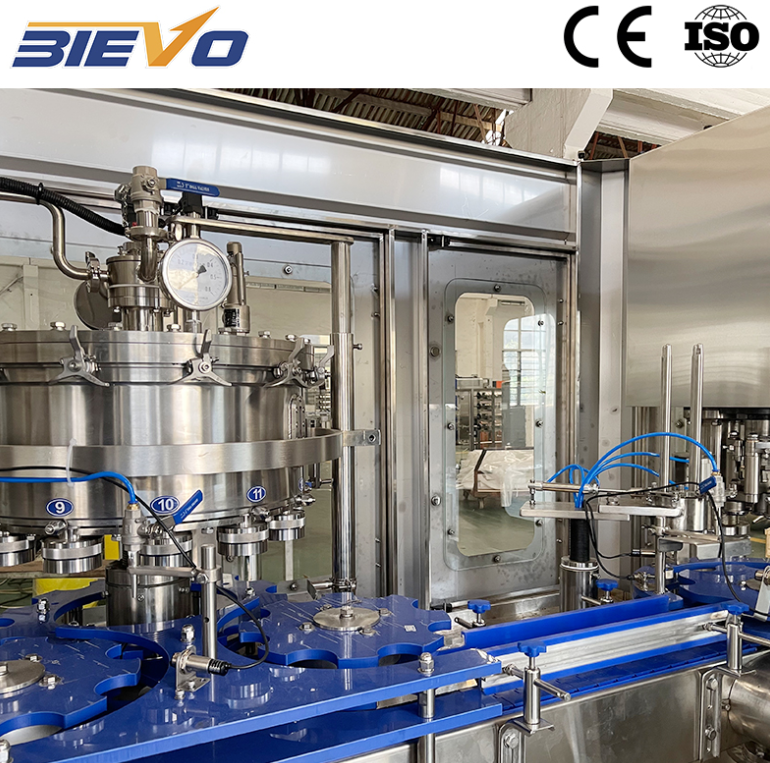
A can filling machine can show a perfect recipe on the HMI while the real fill weight drifts two or three grams across the heads. The gap usually starts in the fill zone, not the screen. Before touching PLC parameters, inspect valve seals, springs, product bowl pressure, and nozzle alignment. Small wear creates repeatable errors that look like software problems. In a retrofit at a beverage plant in southern China, the line drifted on warm afternoons. Two valve seals had swollen after a sanitizer change, and one can guide bracket had worked loose. Replacing the seals with a compatible compound and resetting the bracket cut the fill spread by roughly half. Mechanical stability comes first. A quick check of ten cans per head will show whether the error follows a valve, a lane, or the whole machine. If one head is off, fix the head. If all heads drift together, look at product supply, pressure, or temperature.
Match the Fill Method to How the Product Actually Behaves
Fill accuracy is not only a machine spec. It is a match between the fill method and product behavior. A still water can and a foamy carbonated can do not share the same filling window. Volumetric fillers rely on a fixed volume, so temperature and density changes matter. Level fillers depend on a stable headspace and can be thrown off by foam. Mass flow systems use load cells or flow meters, but they still need clean signals and stable can support. Carbonated products add another layer because pressure and temperature affect dissolved CO2 and foam. A can filling machine that runs well at 4 C may struggle at 10 C if the recipe and fill timing are not adjusted. Record product temperature, bowl pressure, and fill weight together. Look for patterns across the shift, not just a single sample. Many accuracy complaints are really process window complaints. Tighten the window before blaming the filler.
Fix Can Handling Before Chasing Grams
A filler cannot fill a can that is not seated correctly. Worn guide rails, a loose star wheel, or a conveyor speed change can cause splash, cocked cans, and short fills. These faults often show up as random outliers, while valve wear tends to show a steady head pattern. Watch the cans as they enter the fill turret. A small lift or wobble at the seating point is a warning. Run a simple test: slow the conveyor by 10 percent and observe whether the fill variation drops. If it does, the problem is handling, not the fill valve. Also confirm no can no fill interlocks are working and that changeover parts return to the same settings. A digital setup sheet with photos and torque values helps more than a binder of generic instructions. Handling fixes are cheap compared with scrapping product, and they make every later calibration more meaningful.
|
Check point |
Common symptom |
Practical test |
Corrective action |
|
Filler valve seal |
One head drifts after cleaning |
Weigh 10 cans per head, 3 cycles |
Replace with compatible seal, check spring |
|
Can guide and star wheel |
Random low fills and splash |
Slow conveyor 10 percent and watch variation |
Reset rails, replace worn guides |
|
Product temperature |
Foam and short fills on warm shifts |
Log temperature and fill weight every 30 minutes |
Tighten chiller control, adjust fill timing |
|
Sensor mounting |
Slow drift over weeks |
Compare display with traceable scale |
Recalibrate, check bracket and wiring |
Use Sampling and Standards That Reflect Real Output
A single check can is not a capability study. Build a sampling routine that covers heads, shifts, and product changes. Weigh cans after the seamer, record tare weight, and calculate net content. For legal or customer requirements, OIML R87 provides a useful reference for prepackaged product net content, including maximum permissible errors tied to nominal quantity. The standard does not replace a plant's own quality plan, but it gives a defensible baseline. Track results by filler head on a control chart. Look at the moving range, not only the average. A stable average with a wide spread is still a problem. A common mistake is to adjust the filler after every high or low can. That turns normal variation into tampering. Sample enough cans to see the pattern, then act on the cause. For small cans, small gram changes matter, so use a scale with suitable resolution and check it with traceable weights.
Calibrate Sensors and Validate the Whole Loop
Sensors drift, brackets loosen, and wiring picks up noise. A level probe may be clean but slightly out of position. A load cell may be healthy but mounted on a frame that flexes. Calibration should cover the full measurement loop, not just the display. Use traceable weights or a verified flow standard, document the as found and as left readings, and repeat the check after cleaning. Temperature compensation deserves attention because small product temperature shifts can move fill weight without any mechanical fault. Validate with a timed fill and a scale check at production speed. If the machine uses recipe based compensation, confirm that the correct recipe is active after changeover. A can filling machine is a system of mechanical, electrical, and product variables. Calibrating one sensor while ignoring can support or product temperature often explains why accuracy looks good on Monday and poor on Friday.
Make Changeover and Maintenance Repeatable
Most accuracy losses creep in during changeover and cleaning. Seals get swapped without checking compound compatibility, springs go back in the wrong order, and guide rails are set by feel. A repeatable process beats a clever fix. Use a short changeover checklist with photos, torque values, and a verification fill before full production. Train operators to record the first ten cans after every changeover, not just at the start of the shift. Review the data weekly with maintenance and quality. If the same head keeps drifting, look for a root cause rather than repeated adjustment. For beverage producers planning a new line or major upgrade, BIEVO combines decades of filling machinery manufacturing, in house machining, and global service support, which helps keep can filling and packaging projects grounded in practical runability.