
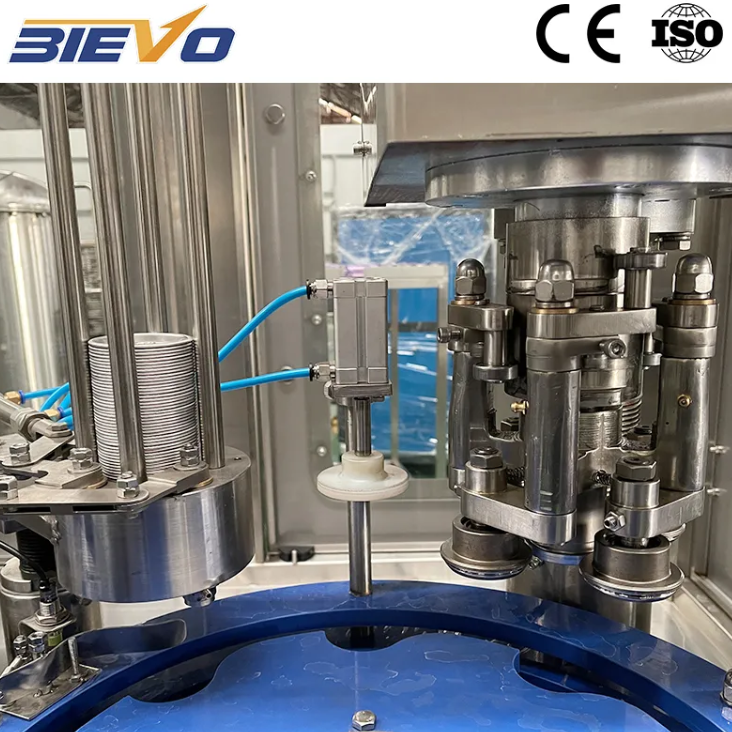
Where Efficiency Leaks in a Traditional Juice Filling Machine
In a juice factory, efficiency is not just about the number on the speed display. It is about how many hours the line actually runs in a 24-hour window. A juice filling machine that stops for 90 minutes of unplanned intervention every shift erodes margin faster than any raw material price spike. Two of the biggest hidden leaks are extended cleaning and sterilization cycles and the slow, manual changeover between bottle formats. When a line sits idle for a four-hour full CIP and SIP sequence in the middle of a production week, that downtime is a direct deduction from the plant's annual output capacity. The push toward higher efficiency often starts with a hard look at those non-production hours.
The Hidden Drain of CIP and SIP Timelines
Aseptic lines require validated Clean-in-Place (CIP) and Sterilize-in-Place (SIP) sequences. Many legacy systems run these on rigid, time-based recipes that assume the worst-case soil load every time. Modern systems replace fixed timers with sensors that measure rinse water turbidity, conductivity, and temperature in real time, releasing the line back to production the moment the cleaning criteria are met rather than after a pre-set 45-minute rinse. The comparison below shows how sensor-driven cleaning cycles can reshape a plant's available production hours.
|
Cleaning Parameter |
Fixed-Time CIP Legacy System |
Sensor-Driven CIP Modern System |
Impact on Line Availability |
|
Rinse phase duration |
15 min (fixed) |
7–12 min (turbidity-controlled) |
+3–8 min per cycle |
|
Caustic circulation |
30 min (fixed) |
20–28 min (conductivity-controlled) |
+2–10 min per cycle |
|
Final rinse and drain |
15 min (fixed) |
8–13 min (turbidity and pH) |
+2–7 min per cycle |
|
Total CIP duration |
~60 min |
~35–53 min |
Saves 7–25 min each CIP |
Over 300 production days with one CIP per day, saving 15 minutes per cycle returns 75 hours of available run time annually, without touching the filler's rated speed.
Why Filler Valve Design Determines Product Recovery
Efficiency in a juice filling machine is also measured by how much product leaves the plant versus how much goes down the drain. A significant loss point is the drip and foam generated at filler valves during stops and starts. Valves with fast-acting, positive shutoff and minimal dead volume prevent juice from dripping onto the conveyor between cycles. Foam, particularly with pulpy or protein-rich blends, can cause underfills that lead to rejections and rework. Mechanical designs that incorporate short product paths and vented valve heads reduce shear on the product and keep foam to a minimum. That matters because every percentage point of product saved on a line running millions of liters per year translates into real revenue.
A Real-World Efficiency Turnaround in a South American Plant
A juice plant in Colombia, running cold-pressed blends in 500ml PET bottles, struggled with a line that consistently delivered only 62% availability during scheduled production windows. The root cause was not the filler speed, it was the accumulation of small delays: CIP cycles that overran by 15 minutes every time because of manual sampling, 20-minute format changes where change parts were not staged properly, and frequent sensor faults that forced micro-stops. The fix involved three straightforward changes: converting the CIP sequence to automated sensor control, standardizing changeover kits on mobile carts with photo guides, and replacing aging proximity sensors with IO-Link versions that could be diagnosed remotely. Availability climbed to 78% within three months, adding the equivalent of nearly two extra production days per month without any increase in machine speed. The experience demonstrates that efficiency gains often hide in the minutes between the headline KPIs.
The Role of Recipe Management in Cutting Changeover Time
When a plant runs six juice SKUs in three bottle formats, changeover time becomes the biggest single factor in overall equipment effectiveness. A recipe-driven juice filling machine stores all parameters for each format—valve stroke, fill height, neck seal pressure, capper torque, labeler offset—and recalls them with a single selection. Manual adjustments with handwheels and trial-and-error tweaks are replaced by servo-driven positioning that hits within a tolerance of ±0.5mm. The validation effort required for aseptic formats means that every changeover must be documented and repeatable. Recipe management systems that log each parameter change automatically create the audit trail that food safety standards like FSSC 22000 expect, while simultaneously cutting the transition time.
Balancing aseptic Integrity with Operational Tempo
There is a natural tension in aseptic juice production: sterility demands patience, but margins demand speed. Pushing the filler to maximum speed while shortening SIP hold times or rushing changeover validations invites contamination events that erase weeks of production gains. The most efficient plants are not the ones that run fastest, they are the ones with the lowest deviation from plan. That requires a filler that holds sterile conditions reliably through stops and restarts, a CIP system that completes each phase with documented success criteria, and a maintenance team that performs scheduled inspections before sensors drift out of spec. Efficiency, in this context, is the result of disciplined process control.
This is the operational philosophy that BIEVO builds into its aseptic filling equipment. With a manufacturing system that integrates filler fabrication, control panel assembly, and process piping under one roof, BIEVO delivers lines where the cleaning, sterilization, and filling modules are engineered as a coherent system. For juice factories looking to raise line availability and cut product losses, that kind of integrated approach can make the difference between chasing efficiency targets and hitting them.
Table of Contents
- Where Efficiency Leaks in a Traditional Juice Filling Machine
- The Hidden Drain of CIP and SIP Timelines
- Why Filler Valve Design Determines Product Recovery
- A Real-World Efficiency Turnaround in a South American Plant
- The Role of Recipe Management in Cutting Changeover Time
- Balancing aseptic Integrity with Operational Tempo