
Why Bottle Variety Complicates Aseptic Juice Filling
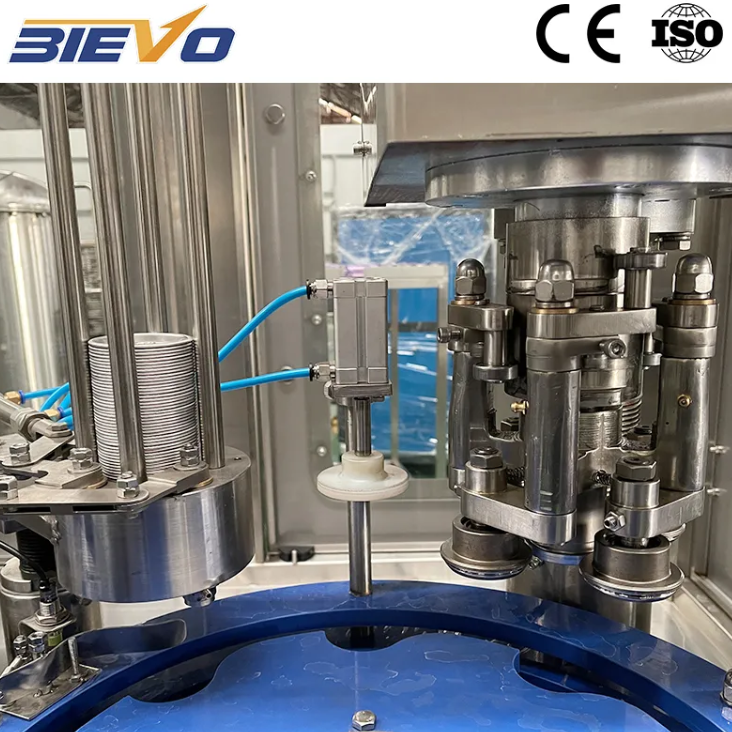
A juice filling machine built for aseptic conditions already operates inside a tightly controlled bubble. Temperature, pressure, sterilant concentration, airflow, and operator gowning all follow protocols that leave almost zero room for deviation. When a plant wants to run six different bottle shapes, four closure types, and two label formats through that same sterile zone, the mechanical and procedural complexity multiplies fast. Each new bottle profile changes how the neck seals against the filling valve, how the container moves through the sterilizer tunnel, and how the cap chucks grip without introducing particulates. The market demands variety—single-serve PET, wide-mouth family bottles, lightweight hot-fill flasks—and the aseptic filling system must reconcile that variety with a contamination rate target that is measured in parts per million.
The Sterile Zone Is a System, Not a Single Machine
There is a common misunderstanding that the “aseptic” part lives only inside the filler enclosure. In practice, the sterile zone begins where bottles exit the package sterilizer and extends through filling, capping, and the immediate downstream transfer until a hermetic seal is verified. Dry sterilization with vaporized hydrogen peroxide (VHP) has become the dominant method for PET juice lines, largely because it reaches complex surfaces without leaving liquid residues that could compromise product taste. Peracetic acid still holds ground in some legacy lines and for certain closure formats. The table below summarizes the sterilization media trade-offs that directly affect how a line handles different bottle geometries.
|
Sterilization Method |
Typical Dwell Time (Bottle) |
Impact on Bottle Shape Flexibility |
Key Monitoring Parameter |
|
Vaporized Hydrogen Peroxide (VHP) |
4–8 seconds in tunnel |
Low; gas reaches undercuts and threads easily |
H2O2 concentration, temperature, aeration time |
|
Peracetic Acid (PAA) spray |
8–15 seconds |
Medium; liquid must fully drain from complex shapes |
PAA concentration, rinse water sterility |
|
Steam (glass only) |
2–4 seconds |
High restriction; PET deformation risk |
Saturated steam quality, condensate removal |
A juice producer running both narrow-neck 300ml PET bottles and wide-mouth 1-liter PET jars on the same line must verify that the sterilant reaches every interior surface. During an audit at a Southern European juice plant, a batch of wide-mouth bottles showed intermittent colony counts after VHP treatment. The root cause was not the sterilant dosage, it was the bottle carrier nest design: the nests for wide-mouth jars partially shielded the inner neck thread from gas flow. Replacing the nests with a custom low-blockage profile eliminated the colony-forming units entirely.
Engineering Change Parts That Do Not Compromise Sterility
Changeover in a non-aseptic bottling line is mostly a mechanical timing exercise. Inside an aseptic juice filling machine, every part that exchanges must do so without introducing microorganisms or disturbing the positive-pressure sterile air cascade. Quick-change features like split star wheels, tool-free filler valve cartridges, and indexed guide rails are standard on modern machines, but the real engineering challenge lies in validating that each combination of change parts maintains sterility after repeated heat or chemical sterilization cycles. Parts made from 316L stainless steel or FDA-compliant polymer compounds endure autoclaving and VHP exposure without micro-cracking—a detail that cheap alternative materials fail at, sometimes after only a few dozen cycles.
A Real-World Shift from Single-Serve to Family-Size Juice Bottles
An East African juice brand decided to launch a 1.5-liter PET bottle for home consumption alongside its existing 250ml on-the-go format. The line operated an aseptic rotary filler with dry-VHP bottle sterilization. During commissioning, the larger bottle showed two problems: first, the wider neck ring required a completely different set of filler centering bells and seal gaskets; second, the taller bottle body created a pendulum effect on the neck-guided star wheels between the sterilizer exit and the filler infeed. The team solved the first issue with a custom valve centering kit. The second required modifying the star wheel pocket profile and installing an additional stabilizing rail along the 300mm transfer arc. That modification cost less than 2% of the total line investment but cut start-up scrap by 60% on the family-size format. The lesson is that aseptic flexibility is rarely about the filler alone, it lives in the physical interfaces between stations.
Recipe-Driven Flexibility and the FDA Validation Framework
Modern aseptic lines store every validated bottle format as a digital recipe. Servo-driven guide rails, filler bowl height, cap chucks, and sterilizer airflow dampers all move to preset positions when an operator selects “Format B.” This recipe-driven approach aligns well with the process validation expectations under 21 CFR Part 113 (low-acid aseptic processing) and the more general ISO 13408 series on aseptic processing of health care products, often referenced for beverages. The standards require documented evidence that every format in the product portfolio has undergone a full sterility validation run, including media fills and package integrity testing. No auditor accepts a single “worst-case” validation to cover an entire family of bottle shapes without supplementary data. Each new neck geometry or closure material triggers its own validation cycle.
Building a Line That Grows with the Brand
What starts as a three-SKU juice portfolio often expands into eight or ten within two years. A juice filling machine that cannot accommodate that growth forces the brand into expensive co-packing arrangements or limits its retail channel options. Planning for future formats means specifying a filler base with extra valve positions that can be activated later, selecting a bottle sterilizer tunnel with 20% additional length, and ensuring the control system has spare I/O and software structure to accept new recipes without an architecture overhaul. These choices add modest upfront cost but protect the line from becoming a stranded asset when the marketing team wants to launch a new shaped bottle.
BIEVO has built a reputation around this kind of forward-looking system engineering. With an integrated manufacturing facility and a portfolio that spans from individual aseptic fillers to complete turnkey juice lines, the company treats every project as a platform that can evolve. Engineering teams work through bottle-specific validation requirements at the specification stage, ensuring that change parts, sterilization profiles, and control recipes are not retrofits but built into the line’s core design. That design philosophy makes scaling up to new bottle formats a manageable process rather than a recurring plant crisis.
Table of Contents
- Why Bottle Variety Complicates Aseptic Juice Filling
- The Sterile Zone Is a System, Not a Single Machine
- Engineering Change Parts That Do Not Compromise Sterility
- A Real-World Shift from Single-Serve to Family-Size Juice Bottles
- Recipe-Driven Flexibility and the FDA Validation Framework
- Building a Line That Grows with the Brand