
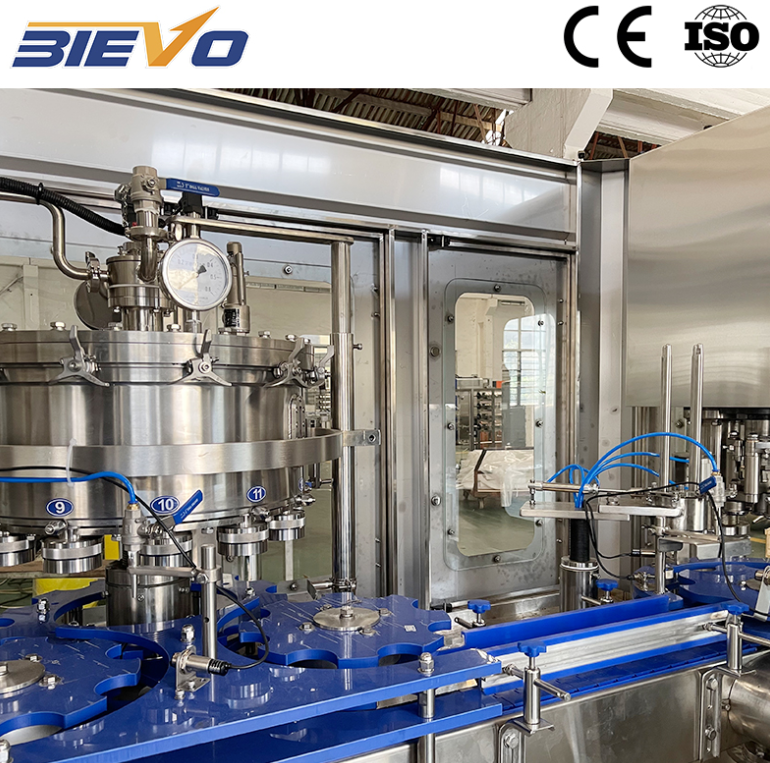
Engineering Challenges in Multi-Spec Aluminum Can Handling
Modern packaging lines encounter severe physical disruptions when switching between standard 355 ml sleek cans, ultra-slim energy drink formats, and large 500 ml containers. Differing neck diameters, such as 202 versus 206 ends, require precise mechanical realignment along every inch of the conveyor path. Container height discrepancies alter vertical compression forces during counter-pressure sealing, while varying sidewall thicknesses make thin-gauge aluminum vulnerable to buckling under high axial stress. Achieving smooth container transfer without line jams demands custom star-wheel geometries and synchronized timing screws designed specifically for each container profile. According to ISO 9001 quality system guidelines, maintaining precise mechanical tolerances across changeover modules prevents container deformation and protects sealing integrity. Operating high-speed packaging lines without dedicated mechanical adaptations leads to continuous micro-stoppages, liquid spillage, and costly container denting, ultimate reducing overall equipment effectiveness across daily production shifts.
Fluid Dynamics Across Standard, Sleek, and Slim Cans
Liquid behavior changes dramatically when flowing into narrow-neck containers compared to wide-body formats. High-viscosity liquids, carbonated beverages, and delicate still teas exhibit different foam dynamics under counter-pressure filling conditions. When gas volume exceeds 3.8 volumes in carbonated liquids, filling slim cans through improper valve orifices creates turbulence, leading to excessive foaming and net fill volume errors. Adjusting flow velocity profiles requires customized filling valve stems and tailored gas flushing tubes that accommodate restricted headspace volumes. Standardizing on a single filling nozzle geometry across all container profiles compromises line stability and product yield. Tailored liquid valve channels control flow velocity near container walls, reducing liquid shear stress and preventing headspace oxidation, which helps maintain flavor stability over extended shelf storage periods.
|
Can Format |
Rim Diameter |
Height Variance |
Pressure Limit |
Changeover Approach |
|
Standard 355 ml |
202 End (52 mm) |
Baseline Reference |
0.60 MPa |
Quick-release star-wheels and fixed spacer plates |
|
Sleek 330 ml |
200 End (50 mm) |
+15 mm taller |
0.55 MPa |
Height-adjustable turret with servo-driven timing screws |
|
Slim 250 ml |
112 End (45 mm) |
+28 mm taller |
0.50 MPa |
Custom pocket inserts, gentle neck clamps, low-impact seamer |
|
King 500 ml |
206 End (56 mm) |
+42 mm taller |
0.65 MPa |
Heavy-duty guide rails, high-torque lift cylinders |
Mechanical Interventions for Rapid Line Changeovers
Executing fast product shifts without sacrificing positional accuracy requires quick-release changeover tooling throughout the entire conveyor route. Traditional mechanical adjustments relying on manual wrenches often introduce human error, throwing star-wheel alignment out of spec by critical fractions of a millimeter. Integrating color-coded guide rails, tool-less quick-change star-wheels, and motorized height adjustments drastically reduces mechanical calibration time during format conversion. Servo-driven elevating turrets automatically adjust vertical stroke distances based on pre-configured recipe profiles stored in the control interface. Implementing pneumatic clamping blocks ensures uniform clamping force across variable neck diameters, reducing metal fatigue on delicate rim flanges while preventing premature wear on supporting mechanical linkages.
Operational Case Study on High-Speed Line Retooling
During a retrofit project at a packaging plant in Southeast Asia, line technicians faced severe container crushing during high-speed runs. The plant was transitioning a packaging line from standard 355 ml cans to extra-slim 250 ml formats. The existing equipment used rigid, heavy-duty mechanical star-wheels designed for thick-walled standard containers. When running thin-walled slim cans, side-wall pressure caused vertical creasing near the bottom dome, resulting in a 4.2 percent container loss rate and frequent manual interventions. The technical team redesigned the inlet scroll and replaced rigid nylon guide wheels with custom-molded ultra-high-molecular-weight polyethylene star-wheels featuring flexible pocket inserts. This adjustment cushioned container entry, stabilized transfer motion, and eliminated container crushing entirely, keeping scrap rates below 0.1 percent while maintaining steady throughput across long production runs.
Seaming Turret Modifications and Double Seam Integrity
Achieving a hermetic seal across variable container heights demands precise adjustments to seaming chucks, lower lifters, and roll profiles. The double seam formation process involves two distinct mechanical operations where first-operation rolls curl the body hook and cover hook together, followed by second-operation rolls flattening the seam structure into a tight leak-proof barrier. Differing flange widths across 200, 202, and 206 end profiles necessitate distinct chuck geometries to prevent metal slipping during rotation. Research published by the Master Brewers Association of the Americas emphasizes that proper pin height and seam thickness calibration are essential for preventing micro-leakage and microbial ingress. Integrating force sensors beneath seaming pedestals allows real-time measurement of vertical compression forces, ensuring seam integrity across varying metal gauges and preventing rim fracture under high seam loading.
Custom Automation and Integrated Line Control Systems
Flexibility in mechanical components must be matched by adaptive control software that manages real-time parameter changes. Modern can filling machine architectures utilize programmable logic controllers linked to high-resolution encoder systems for precise indexing. When switching between carbonated soft drinks, nitrogen-dosed juices, and still mineral water, the control system adjusts pre-evacuation cycles, gas pressurization times, and snifting valve discharge speeds automatically. Automated recipe selection optimizes fill height compensation according to ambient liquid temperatures, preventing under-filling caused by thermal expansion during summer operational windows. Equipment engineering from BIEVO combines robust precision-machined components with flexible automation architecture, supporting seamless adaptations across diverse container specifications while maintaining long-term structural integrity and precise processing performance in demanding production environments.
Table of Contents
- Engineering Challenges in Multi-Spec Aluminum Can Handling
- Fluid Dynamics Across Standard, Sleek, and Slim Cans
- Mechanical Interventions for Rapid Line Changeovers
- Operational Case Study on High-Speed Line Retooling
- Seaming Turret Modifications and Double Seam Integrity
- Custom Automation and Integrated Line Control Systems