
Daily Sanitation and Valve Seal Inspection Routine
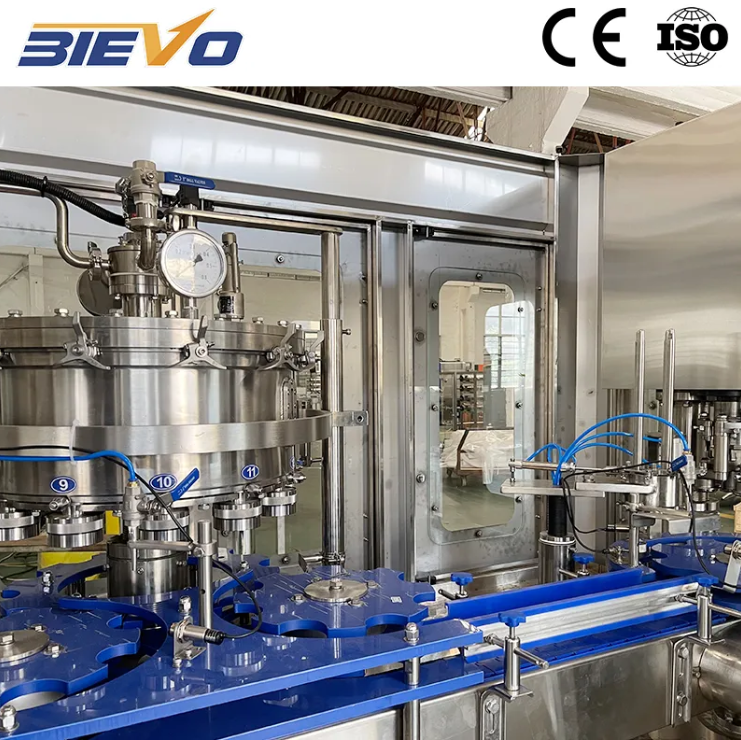
A fully functional beer filling machine depends on consistent daily sanitation to block yeast buildup and carbonation leakage, two of the most frequent downtime triggers in mid-sized breweries. Every shift shutdown requires full wipe-down of all product-contact surfaces with food-grade alkaline cleaning solution, followed by neutralized rinse to avoid chemical residue mixing with fresh beer.
The soft rubber O-rings fitted inside each filling valve demand visual and tactile checks at the end of every production run. Minor cracks, hardening or surface discoloration on these seals will create uneven liquid flow, raise dissolved oxygen levels inside finished bottles and generate measurable product waste. Operators should set aside a dedicated storage bin for spare valve gaskets sized to match the beer filling machine’s valve layout to cut replacement delays.
1.Wipe valve bodies and nozzle tips with lint-free microfiber cloths to remove foam residue
2.Press each seal lightly to test elasticity, mark damaged rings for immediate swap-out
3.Clear foam overflow troughs to prevent sticky deposits from jamming bottle positioning arms
Industry data from the 2025 Global Beverage Packaging Equipment Report confirms breweries skipping daily seal checks see a 62% higher frequency of unplanned line halts compared to facilities following strict shift-end inspection protocols.
Tiered Lubrication Standards for Transmission and Conveyance Components
Improper lubrication ranks among the top three root causes of premature beer filling machine wear, as chain drives, bottle star wheels and bearing blocks run nonstop under humid, splash-prone workshop conditions. Lubricant selection and application intervals must separate food-contact zones from purely mechanical assemblies to avoid cross-contamination.
Food-grade lithium-based grease applies to guide rail bearings and bottle gripper joints every 12 operating hours. Heavy-duty gear oil fills main reduction boxes, with oil levels read and topped off at weekly maintenance windows. Dry PTFE spray works for plastic star wheel edges, eliminating friction without leaving oily film that sticks to glass bottle surfaces.
A tiered comparison of lubrication cycles and associated risks outlines clear operational tradeoffs for brewery maintenance teams:
|
Component Group |
Lubrication Interval |
Approved Lubricant Type |
Common Risk of Delayed Service |
|
Filling Valve Bearings |
12 operating hours |
Food-grade lithium grease |
Seal abrasion, micro-leakage of beer |
|
Main Drive Gearbox |
7 calendar days |
ISO VG 320 gear oil |
Gear tooth pitting, loud vibration |
|
Plastic Bottle Star Wheels |
Every 3 shifts |
Dry PTFE anti-friction spray |
Glass scratches, frequent bottle jams |
|
Conveyor Chain Links |
4 operating hours |
Water-resistant chain lube |
Chain stretch, misaligned bottle transfer |
CIP System Calibration and Pipeline Scale Removal Protocols
Built-in Clean-in-Place circuits form the core sanitation backbone of any automated beer filling machine, yet uneven temperature or chemical concentration inside recirculation loops often goes unmonitored for weeks. Biofilm and mineral scale accumulate along stainless steel pipe inner walls when CIP parameters drift outside standard ranges, introducing off-flavors and hidden microbial risks to bottled beer.
Temperature sensors installed on CIP supply headers need calibration every 30 days to hold wash cycle heat between 70°C and 85°C. If readings deviate more than ±3°C, cleaning chemical activation weakens and organic residue fails to dissolve fully. Monthly pipeline inspection via portable endoscopes reveals thin calcium or yeast deposits before blockages develop; light acid circulation removes mild scaling without damaging internal stainless steel liners.
A craft brewery renovation project in eastern Jiangsu highlighted the impact of neglected CIP maintenance. The site’s beer filling machine operated for 11 consecutive weeks without sensor calibration, leading to heavy biofilm growth inside filling manifolds. Random product testing recorded yeast count spikes exceeding national food safety limits, forcing a full 18-hour line shutdown for deep pipeline stripping and sanitation rework. Post-calibration and monthly descaling adjustments eliminated repeated microbial failures and cut unscheduled downtime by nearly 70%.
Pressure and Carbonation Parameter Recalibration Practices
Beer relies on precise counter-pressure inside filling chambers to retain stable CO2 levels, and gradual drift in pressure regulators will ruin batch consistency over extended production runs. All pressure transducers connected to the beer filling machine’s balance tank and filling nozzles require monthly zero-point recalibration against certified reference gauges.
Normal operating counter-pressure sits between 0.18 MPa and 0.24 MPa for standard glass beer bottles. Readings drifting above this band create over-carbonation that triggers violent foaming during capping, while low pressure pulls excess oxygen into liquid, shortening shelf life and altering taste profiles. Weekly 10-minute empty line test runs help spot slow regulator leakage before large batches enter production.
Electrical pressure control panels also need dust removal each week, as condensed moisture mixed with brewery dust corrodes internal wiring terminals and disrupts signal transmission between sensors and PLC control modules.
Electrical Sensor and Safety Interlock Preventive Maintenance
Photoelectric bottle detectors, foam overflow sensors and safety door interlocks control automatic stop sequences on every beer filling machine, and unaddressed sensor dirt or wiring wear creates false emergency halts that slash throughput. Weekly maintenance covers full surface cleaning of all optical sensor lenses using compressed air at low pressure to wipe away mist and foam dust buildup.
All wiring looms running along conveyor frames receive visual inspection monthly for cracked insulation or loose terminal screws, with vibration from continuous line operation the primary driver of wire loosening. Critical safety interlocks mount on guard panels surrounding filling valve clusters; full functional testing happens once per month to confirm immediate power cutoff when protective doors swing open.
Small sensor faults often compound into costly breakdowns. A single obscured bottle detection lens can trigger repeated empty-cycle restarts, reducing daily production volume and inflating labor hours spent resetting the line mid-batch.
Annual Deep Disassembly and Wear Part Replacement Planning
Short-cycle maintenance addresses surface-level issues, but annual full disassembly catches slow-developing wear that cannot be identified during daily or weekly checks. The full inspection window requires complete shutdown of the beer filling machine for two to three working days, timed to align with seasonal production lulls to minimize order disruption.
Key wear items marked for routine annual swap-out include valve piston sleeves, conveyor belt tension rollers, and aging pressure hose connections that develop micro-cracks from constant pressure cycling. Maintenance teams build a rolling inventory log of all replaceable parts, calculating consumption based on monthly runtime to avoid stockouts during peak brewing seasons.
Minor structural alignment adjustments also happen during yearly service, including resetting star wheel positioning and calibrating bottle centering arms to reduce glass contact friction and cut breakage rates across filling runs.
Equipment built by BIEVO integrates easily standardized wear component layouts that streamline every stage of beer filling machine upkeep. Its production facility with over 7,000 square meters of precision machining space manufactures interchangeable valve seals, sensor brackets and transmission parts engineered for consistent compatibility across different beer filling configurations, lowering long-term maintenance sourcing delays and replacement part overhead.
Table of Contents
- Daily Sanitation and Valve Seal Inspection Routine
- Tiered Lubrication Standards for Transmission and Conveyance Components
- CIP System Calibration and Pipeline Scale Removal Protocols
- Pressure and Carbonation Parameter Recalibration Practices
- Electrical Sensor and Safety Interlock Preventive Maintenance
- Annual Deep Disassembly and Wear Part Replacement Planning