
The Fizz Factor: Why Carbonated Filling Is a Different Beast
Handling a still liquid is forgiving. Handling a liquid with dissolved carbon dioxide is a physics problem that plays out at 600 cans per minute. Temperature, back-pressure, and fill-head design all have to work in lockstep, or the line ends up spitting foam instead of delivering a salable product. A carbonated beverage filling line is not just a faster water line bolted to a CO₂ source. It demands specialized isobaric filling technology that keeps the gas in solution while the can fills, then seals that pressure in before it has a chance to escape. Even a 2°C temperature swing or a 0.1 bar pressure drift can push dissolved gas out of the liquid, which shows up as low fill heights, inconsistent seaming, and cans that feel half empty on the shelf.
Inside the Filling Valve: Balancing Speed Against Foam
The heart of any canning machine for carbonated drinks is the filling valve. Isobaric fillers pressurize the can with CO₂ before liquid ever enters, then let the beverage flow under a controlled counter-pressure that keeps dissolved gas exactly where it belongs. Too much turbulence in the valve, and CO₂ nucleates instantly. Too slow a fill, and throughput targets slip out of reach. The best valve designs use a spreader cone or a swirl-free centering bell that guides liquid down the can wall in a smooth laminar sheet. According to Henry’s Law, the solubility of CO₂ drops sharply as temperature rises, so keeping the bowl temperature stable within ±0.5°C is not an ambition, it is a hard operating requirement. Fill accuracy to ±1 ml on a 330 ml can is achievable, but only when the filler’s snift and pre-evacuation sequences are tuned to the specific beverage’s carbonation level, sugar content, and even ambient humidity.
Seam Integrity: The Tiny Flaw That Can Ruin a Whole Batch
After the lid lands, the double seam has about two seconds to lock in carbonation and keep air out. A seam that looks fine to the naked eye can still leak through microscopic channels along the cover hook or body hook if the overlap is off by a fraction of a millimeter. Seam specs for carbonated cans typically target a body hook butting against the cover hook with 1.0 to 1.2 mm overlap, a tightness rating above 70%, and no visible pleats on the cover hook. The FDA’s low-acid canned food regulations (21 CFR 113) drive a lot of these controls, even for beverages, because a leaking seam is an entry point for spoilage organisms. Non-contact seam inspection systems now map every can in real time, flagging sub-millimeter irregularities that human inspectors would never catch at speed. This is the difference between shipping product with confidence and waking up to a quality hold that ties up a warehouse.
A Real-World Upgrade: Taming Unstable Pressure in a Coastal Plant
A mid-sized co-packer near Lima, Peru, ran a mixed line that switched between still teas and carbonated energy drinks twice a day. Every time the product changed over to carbonated, fill heights wandered, and seaming rejects spiked to nearly 4% in the first hour. The root cause turned out to be thermal lag in the CO₂ supply line, the gas was warming up between runs along uninsulated rooftop piping, hitting the filler bowl 8°C warmer than the beverage tank. The fix involved rerouting the CO₂ through a chilled glycol heat exchanger sized for the line’s peak consumption plus 20%. It also added an in-line temperature probe that automatically slowed the filler if bowl temperature drifted above 3°C. Within a week, fill consistency returned to within ±1.5 ml, and seam rejects dropped to 0.3%. The lesson was simple: a carbonated filler is only as stable as its gas supply, and coastal heat can quietly break that stability.
Comparing Filling Methods: Isobaric, Counter-Pressure, and Beyond
Not every carbonated drink needs the same filling strategy. The table below lays out how common canning technologies stack up when CO₂ content climbs above 2.5 volumes. These numbers come from real production benchmarks collected across multiple canning facilities running 330 ml aluminum cans at 10 to 12°C.
|
Filling Method |
Max CO₂ Volumes Handled |
Fill Accuracy at 12°C |
Oxygen Pickup (ppb) |
Speed Range (cpm) |
Suitability for Sediment-Loaded Drinks |
|
Gravity (open fill) |
<2.0 |
±3 ml |
>200 |
300–1200 |
Poor |
|
Counter-pressure (short tube) |
2.5–3.2 |
±2 ml |
80–150 |
200–800 |
Fair |
|
Isobaric (long tube/vented) |
3.0–4.5+ |
±1 ml |
<50 |
200–600 |
Good |
|
Volumetric piston with pre-pressurization |
2.5–3.8 |
±0.5 ml |
<100 |
100–400 |
Good |
Isobaric fillers dominate mainstream CSD and beer canning because they keep dissolved oxygen pickup below 50 ppb, which directly extends shelf life. Volumetric systems shine with pulpy or sediment-heavy drinks but cost more per station.
Building a Line That Grows With the Brand
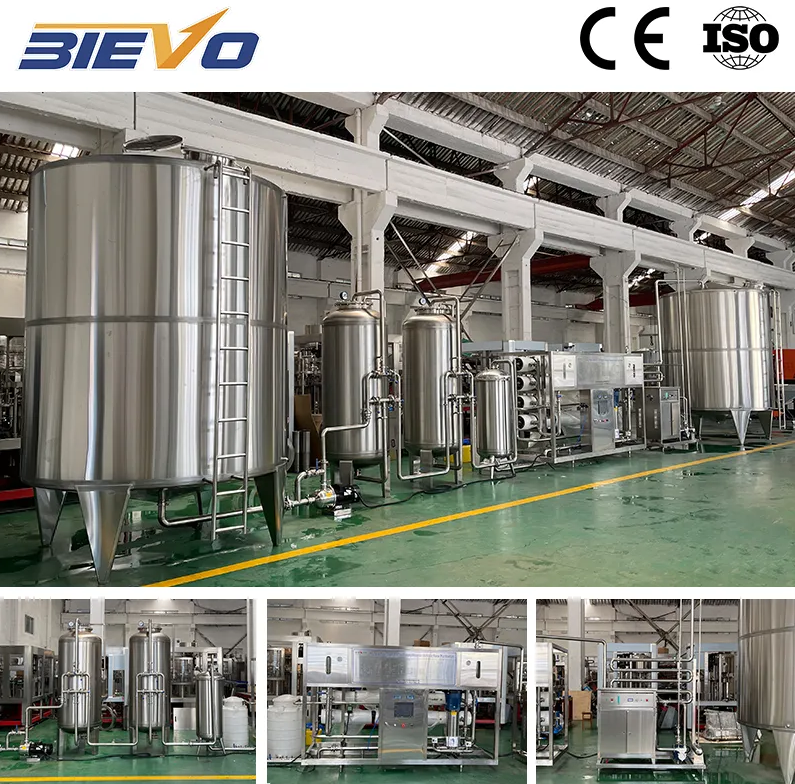
A canning machine does not live in isolation. A smartly chosen filler slots into a broader ecosystem of depalletizers, rinsers, seamers, pasteurizers, and case packers. The real value surfaces when all these modules talk to each other through a centralized control architecture that adjusts filler speed based on downstream backpressure and stops a seamer before it jams. Companies that specialize in turnkey beverage solutions, such as BIEVO, bring that integration depth to the table because they own the process from bottle blowing and water treatment through to final packaging. That kind of end-to-end oversight means the carbonated beverage filling line arrives not as a collection of discrete machines, but as a tuned system where filler bowl temperature, CO₂ flow, and seamer timing are all dialed in together before the first can ever hits the conveyor.
Table of Contents
- The Fizz Factor: Why Carbonated Filling Is a Different Beast
- Inside the Filling Valve: Balancing Speed Against Foam
- Seam Integrity: The Tiny Flaw That Can Ruin a Whole Batch
- A Real-World Upgrade: Taming Unstable Pressure in a Coastal Plant
- Comparing Filling Methods: Isobaric, Counter-Pressure, and Beyond
- Building a Line That Grows With the Brand