
Why Hygiene and Drip Control Are Two Sides of the Same Coin
A glass bottle filling machine that leaves product on the bottle finish is not just creating a cosmetic problem. It is creating a hygiene risk that compounds over time. That thin film of sugary juice or malt based beer on the threads and neck of a glass bottle becomes a feeding ground for bacteria, yeast, and mold. Once those microorganisms establish themselves, they can migrate under the closure and contaminate the product, even if the filling environment itself was sterile. The drip issue and the hygiene issue are therefore inseparable. A filler that controls drips well is inherently easier to keep sanitized, and a filler designed for sanitary operation usually incorporates the mechanical precision needed for clean cutoff. Glass amplifies both sides of this equation. The transparent material makes any residue on the bottle exterior immediately visible to a consumer, while the rigid, nonporous surface means that properly executed cleaning and sanitation actually works, there is no place for microbes to hide in the material itself. Getting both the hygienic design and the non drip performance right starts long before the first bottle enters the filler.
The Clean Design Principles That Start at the Metal
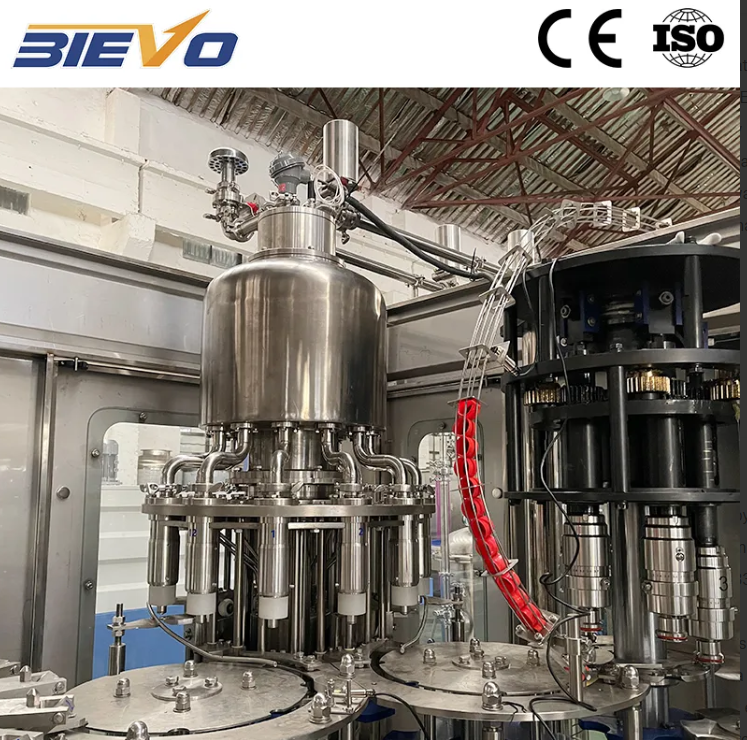
Hygiene in a glass bottle filling machine begins with the stainless steel itself. The industry standard calls for AISI 304 as a minimum for product contact surfaces, with AISI 316L preferred for applications involving higher acidity or aggressive cleaning chemicals. But the grade of steel is only half the story. The surface finish matters just as much. Surfaces that contact product or splash zones should be polished to a roughness average of 0.8 micrometers or better. Any rougher and microscopic pits begin to harbor biofilm, which standard CIP cycles struggle to remove. Weld seams throughout the filler bowl, product piping, and valve bodies must be ground smooth and passivated. Dead legs in the piping, the sections where liquid can stagnate between production runs, are a design flaw that modern sanitary fillers engineer out entirely. The filler bowl itself should be designed to drain completely, with no internal ledges or pockets where cleaning solution can pool. Every gasket, O-ring, and seal in the product path needs to be made from food grade elastomers that can withstand both the product chemistry and the temperatures of hot sanitation cycles. EPDM and FKM compounds are typical choices, selected based on compatibility with the specific beverage.
Filling Valve Mechanics That Prevent Drips
The non drip performance of a filling machine lives and dies in the valve design. Most modern glass bottle fillers use either gravity fed valves with a positive shutoff mechanism or counter pressure valves that seal against the bottle mouth during the fill cycle. The critical component is the seal at the point where product exits the valve and enters the bottle. A well designed valve uses a precision ground sealing surface, often a ceramic or hardened stainless steel plunger, that mates with a flexible seat. When the valve closes, this pairing creates a clean shear that cuts off the liquid stream without leaving a tail of product hanging from the nozzle. The speed at which the valve closes matters enormously. Too slow and a droplet forms and falls after the bottle has already started indexing away, landing on the bottle neck or the conveyor. Too fast and the sudden closure creates a pressure pulse that can splash product back up toward the valve body. The sweet spot is a controlled deceleration just before the seal makes contact, something that mechanical cam driven valves achieve naturally through their cam profile geometry. Pneumatically actuated valves need carefully tuned flow controls on the exhaust side to replicate this smooth closing action.
The Bottle Handling Sequence That Keeps Everything Clean
Drips do not only come from the filling valve. A surprising amount of product gets onto the outside of glass bottles during the transfer between stations. When a filled bottle moves from the filler carousel to the capper, any residual foam that has risen above the fill level can slosh over the lip if the transfer is jerky or poorly timed. The star wheels, guide rails, and transfer plates in this zone must be designed to keep the bottle stable through the transition. The filler's centering bell, which guides the bottle up to the filling valve, should engage and release without striking the bottle finish. Repeated impacts chip glass and create rough edges that trap product residue. Below the filling zone, drip trays or catch pans collect any stray liquid and channel it to drain lines, preventing it from splashing onto bottles traveling on the lower conveyor. These trays need to be easily removable for cleaning. If a drip tray requires a technician with tools and twenty minutes to take out, it will not get cleaned as often as it should. The entire lower frame and conveyor area should be designed for washdown, with sloped surfaces that shed water and sealed electrical enclosures that keep moisture out of the controls.
|
Hygienic Design Feature |
Purpose |
Consequence of Omission |
|
Polished product contact surfaces with surface roughness of 0.8 micrometers or better |
Prevents biofilm attachment and eases CIP cleaning |
Gradual buildup of organic residue, microbial growth |
|
Drainable filler bowl with no internal ledges |
Eliminates standing liquid between production runs |
Cleaning chemical carryover into next batch, bacterial proliferation |
|
Ceramic or hardened stainless valve plunger with flexible seat |
Provides clean, drip free liquid cutoff |
Product dribbling onto bottle necks and conveyor surfaces |
|
Removable drip trays with direct drain connections |
Captures stray product before it contaminates bottle exteriors |
Sticky conveyor tracks, mold growth, pest attraction |
|
Food grade elastomer seals throughout product path |
Ensures chemical compatibility and thermal resistance |
Seal swelling, cracking, and particulate contamination of product |
Cleaning Validation and the Role of CIP Systems
A glass bottle filling machine that is not cleanable is not hygienic, regardless of how polished its surfaces are. Clean in place systems have become the standard for beverage fillers because they automate what used to be a manual, labor intensive, and inconsistent process. The CIP cycle pushes cleaning solutions, typically a caustic wash followed by an acid rinse and a final sanitizing flush, through the same product pathways that the beverage travels. The effectiveness of CIP depends on four variables that every plant engineer learns to manage: chemical concentration, temperature, contact time, and mechanical action from flow velocity. If the cleaning solution moves too slowly through the pipes and filler bowl, it cannot generate the turbulent flow needed to scour surfaces. The rule of thumb for pipe circuits is a minimum flow velocity of 1.5 meters per second. The filler bowl spray balls or spray heads must be positioned so that every internal surface receives direct impingement. Shadow zones where spray patterns do not reach become long term contamination sources. Validating the CIP process involves running a cleaning cycle and then swabbing internal surfaces for ATP testing or microbiological culture. Passing these tests consistently over multiple cycles is what earns a filler its clean designation.
Building Hygiene Into the Machine From Day One
Hygienic filling is not achieved through cleaning alone. It is a design philosophy that shapes the machine before metal is cut. The filler frame should have minimal horizontal surfaces where dust and debris can settle. Cable runs and pneumatic tubing should be routed inside sealed channels or along the back side of the frame, away from the product zone. The human machine interface panel should be positioned where an operator can see the line without leaning over the filling area. These details seem minor during a factory acceptance test, but they define the daily reality of running the machine in a production environment. A manufacturer like BIEVO, which has spent decades engineering complete glass bottle filling lines, understands that hygiene is not a feature added at the end. It is a thread that runs through material selection, valve design, frame construction, and control system integration. When a filler arrives on site with that philosophy embedded in its engineering, the cleaning crew knows they can reach every surface, the maintenance team can access seals for scheduled replacement without dismantling half the machine, and the quality manager sees consistently low microbial counts in finished product testing. That kind of confidence does not come from a spec sheet. It comes from a machine built by people who have spent years learning what happens when hygiene shortcuts catch up with a production line.
Table of Contents
- Why Hygiene and Drip Control Are Two Sides of the Same Coin
- The Clean Design Principles That Start at the Metal
- Filling Valve Mechanics That Prevent Drips
- The Bottle Handling Sequence That Keeps Everything Clean
- Cleaning Validation and the Role of CIP Systems
- Building Hygiene Into the Machine From Day One