
Sanitary Surface Finishing and Fluid Contact Metallurgy
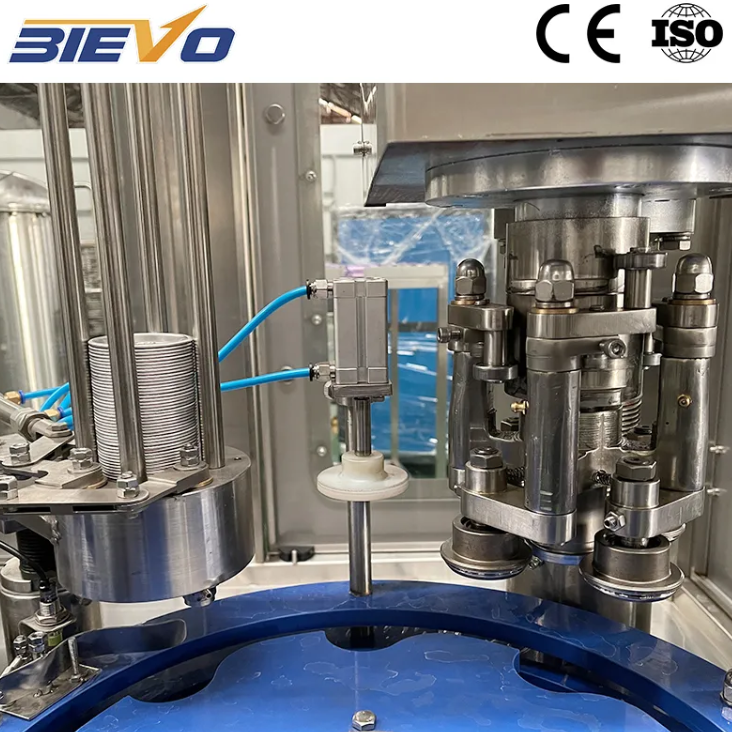
High-acid and high-sugar liquid processing presents severe mechanical and microbial challenges for beverage packaging equipment. Fruit pulp, natural organic acids, and suspended sugars aggressively attack inferior metals, creating microscopic pitting where bacterial colonies thrive over extended shifts. Engineering an industrial juice filling machine requires strict adherence to specialized metallurgy and surface chemistry standards to prevent batch contamination. Product-contact surfaces must utilize AISI 316L stainless steel, which contains higher molybdenum content to resist chloride pitting and acid corrosion. Internal pipe walls, valve chambers, and fluid manifold headers demand electro-polishing down to a surface roughness below 0.4 micrometers Ra. Standard mechanical grinding leaves micro-scratches that trap organic solids, whereas electro-polishing removes surface peaks at the molecular level. Smooth internal surfaces prevent sugar paste accumulation and ensure uniform fluid motion without stagnation zones during long multi-shift operations.
Valve Geometry and Elimination of Dead Legs
Liquid valve architecture governs product hygiene, microbial risk control, and daily cleaning efficiency. Traditional threaded connections or internal O-ring grooves create stagnant zones where CIP chemicals cannot penetrate effectively during wash routines. Sanitary engineering guidelines established by the European Hygienic Engineering and Design Group state that the length-to-diameter ratio of any un-flushed branch or dead leg in fluid piping must not exceed 1.5. Modern filling valves eliminate internal threads entirely in favor of diaphragm seals and clamp connections. Elastomer gaskets must meet FDA 21 CFR 177.2600 standards, resisting high-temperature caustic washes without leaching synthetic compounds or hardening over time. Self-draining valve geometries ensure that cleaning solutions flush completely from internal cavities after sanitation cycles, preventing chemical carryover into subsequent product batches.
- Replacing threaded valve assemblies with hygienic triclamp connections eliminates hidden gaps where bacterial biofilms develop over time.
- Utilizing PTFE diaphragm seals isolates mechanical valve actuators from product contact, preventing lubricant migration into beverage streams.
- Designing slope angles greater than three degrees across all fluid transfer lines ensures natural gravity drainage during sanitation flushes.
|
Design Parameter |
Conventional Standard Machine |
EHEDG Hygienic Standard Machine |
|
Surface Roughness (Ra) |
0.8 to 1.2 micrometers |
Below 0.4 micrometers |
|
Fluid Line Metallurgy |
AISI 304 Stainless Steel |
AISI 316L Stainless Steel |
|
Internal Piping Joints |
Threaded or Flanged Joints |
Orbitally Welded Triclamp Fittings |
|
Max Dead-Leg Ratio (L/D) |
Greater than 3.0 |
Less than 1.5 |
Environmental Enclosure and Positive Pressure Air Management
Preventing post-pasteurization contamination requires separating the filling zone completely from ambient factory environments. Airborne fungi, mold spores, and fine dust particles disrupt product stability if allowed into open container necks during filling operations. Hygienic machinery housing utilizes stainless steel isolators fitted with HEPA air filtration units that maintain a sterile environment. Maintaining positive air pressure inside the filling chamber ensures that air flows outward whenever access doors open, preventing non-sterile ambient air from entering the clean enclosure. Sloped roof panels and sloped internal surfaces prevent condensation droplets from forming directly above open bottle conveyers, eliminating the risk of contaminated moisture falling into liquid product prior to bottle capping.
Engineering Field Case Study on Internal Crevices and Biofilm Formation
During a plant audit at a juice bottling facility in South America, quality assurance teams detected sporadic yeast contamination across orange juice batches. The facility processed high-pulp beverages on a legacy rotary line under heavy production demands. Chemical swab testing showed clean surfaces across main supply piping, but contamination persisted after sanitizing cycles. Technical tear-downs revealed that the original filling valves used standard threaded stems with internal rubber O-rings. Pulp fibers lodged in the thread grooves, shielding yeast spores from hot caustic flushes. The engineering team replaced the entire valve assembly with seamless PTFE diaphragm valves featuring electro-polished internal surfaces. Post-installation swab tests showed zero microbial counts, completely resolving batch rejections and restoring product stability without reducing operational line speed.
Cleaning-in-Place Automation and Sanitation Validation
Automated sanitation routines must deliver reproducible hygienic results without relying on manual operator intervention or subjective visual checks. CIP systems validate cleaning effectiveness by monitoring four critical parameters: chemical concentration, temperature, contact time, and fluid velocity. Fluid flow rate through filling valves must maintain a minimum velocity of 1.5 meters per second to generate sufficient wall shear stress, removing stubborn pulp deposits from internal pipe walls. Automated conductivity sensors verify that caustic wash solutions reach target concentrations, while temperature probes confirm that thermal cycles stay above 85 degrees Celsius throughout the entire flush duration. Automated logging systems capture sensor data in real time, ensuring every cleaning cycle meets regulatory oversight standards before production restarts.
Integrated Hygienic Manufacturing and Global Packaging Standards
Achieving compliance with international food safety requirements demands harmonizing mechanical design, material selection, and automated sanitation controls across the entire packaging facility. Disconnects between water treatment systems, pasteurization loops, and bottle handling equipment compromise total plant hygiene and create operational vulnerabilities. Turnkey engineering aligns component fabrication, electrical control logic, and CIP integration under a unified quality assurance framework. Machinery manufacturing from BIEVO combines precision machining, rigorous metallurgical quality checks, and responsive technical support, enabling beverage producers to build compliant production lines capable of meeting rigorous global food safety standards.
Table of Contents
- Sanitary Surface Finishing and Fluid Contact Metallurgy
- Valve Geometry and Elimination of Dead Legs
- Environmental Enclosure and Positive Pressure Air Management
- Engineering Field Case Study on Internal Crevices and Biofilm Formation
- Cleaning-in-Place Automation and Sanitation Validation
- Integrated Hygienic Manufacturing and Global Packaging Standards