
The Hidden Payroll Inside a Manual Canning Operation
Walk through a beverage plant that still relies on semi-automatic equipment, and the labor numbers are rarely obvious on a spreadsheet. They hide in the three people hand-loading lids into the seamer chute, the operator tweaking a fill level knob every few minutes, and the two temps breaking down jammed cases at the packer. A carbonated beverage filling line that runs without tight automation ties up four to six operators per shift just to keep fill heights and seam specs within tolerance. Those same people are not available for sanitation, changeover prep, or quality checks. When batch records show an eight-person crew producing 12,000 cans in ten hours, the labor-per-case figure eats into margins that a contract packer simply does not have. Automation changes that math by replacing repetitive physical tasks with repeatable machine cycles, letting a smaller crew manage a faster line with fewer deviations.
Where the Machines Take Over: From Depalletizing to Palletizing
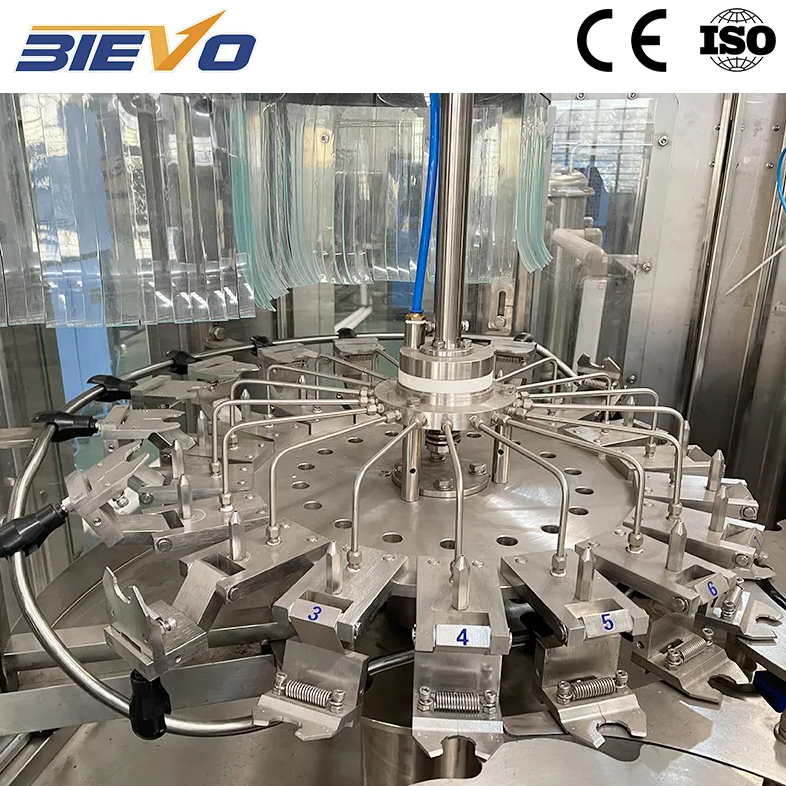
The most immediate labor savings on an automated canning line show up at the front and back ends. Depalletizers that self-feed empty cans through a rinser eliminate two operators who would otherwise spend a full shift stacking and orienting cans. On the packaging side, automatic case erectors, tray packers, and palletizers shrink a four-person manual packing station down to one technician who monitors machine status. The middle of the line, the filler-seamer block, gains the most from closed-loop control. A modern filler with mass flow meters per valve and a seam inspection system linked to the filler's rejection logic can run for hours without an operator touching a can. It is not about removing human judgment, just moving it away from repetitive adjustments and toward process oversight.
A Line Upgrade That Flipped the Crew Equation Overnight
A co-packing facility outside Ho Chi Minh City ran a mixed canning operation for years: a semi-automatic filler mated to a manual lid-feeding seamer, followed by hand-packing into shrink-wrapped trays. Peak season demand for a lychee-flavored carbonated drink forced the plant manager to staff four shifts of nine workers each, and fill accuracy still drifted enough to generate 2.5% overfill loss. The upgrade to an integrated automatic canning line, built around a single-source filler-seamer monoblock with servo-driven seamer chucks and an automatic tray packer, cut direct line staffing from nine to three per shift. Over the first six months, overfill loss fell to 0.4%, and the 2,200 annual overtime hours linked to manual packing disappeared. The payback window came in just under 14 months, not because the machines ran dramatically faster, but because fewer hands touched every can and every tray.
Comparing Labor Profiles Across Canning Line Automation Levels
Not every plant can justify a fully lights-out packaging hall, and not every product runs well on a high-speed line. The table below draws on production data collected from three canning facilities processing 330 ml aluminum cans at similar volumes, comparing labor deployment across different automation configurations.
|
Automation Level |
Operators per Shift |
Cans per Operator Hour |
Typical Overfill Loss |
Changeover Time (minutes) |
Labor Cost per 1,000 Cans (USD) |
|
Semi-automatic (manual lid feed, manual pack) |
7–9 |
1,200–1,500 |
2.0–3.0% |
45–60 |
12.50–16.00 |
|
Mixed automation (auto filler, manual pack) |
5–6 |
2,000–2,400 |
1.0–1.8% |
35–45 |
8.50–11.00 |
|
Full automation (depal to pallet) |
2–3 |
3,800–4,500 |
0.3–0.8% |
15–25 |
4.00–6.50 |
The numbers make a clean argument for full automation at volumes above roughly 25,000 cans per day. Below that threshold, mixed automation still captures a significant share of the labor saving without the upfront cost of robotic palletizing. A 2023 PMMI industry report on beverage packaging automation noted that labor cost reduction remains the top driver for equipment investment among mid-sized producers, even ahead of throughput gains.
The Overlooked Savings: Consistency, Turnover, and Training Time
Direct headcount reduction gets the attention, but the quieter savings often matter more over a five-year equipment lifecycle. Automated lines produce the same can weight, the same seam thickness, and the same label placement shift after shift, which eliminates rework and holds that eat into both labor and material budgets. They also blunt the impact of operator turnover. When a veteran filler operator leaves a manual line, the replacement's learning curve shows up in scrap numbers for weeks. On a fully automated line, the new hire monitors a screen and responds to alerts, the machine holds the process knowledge. Training time drops from days to hours, and the difference between a six-month operator and a six-year operator shrinks to a few percentage points on an OEE report.
Commissioning Partners That Understand the Labor Equation
Getting the labor savings on paper is one thing. Delivering them on the factory floor requires a line that arrives with all the control logic already talking between the filler, seamer, labeler, and packer. When a depalletizer slows down, the filler should adjust its infeed speed without an operator stepping in. When a seamer head drifts out of spec, the line should flag it before a full pallet of cans goes on hold. Suppliers that engineer this level of integration from the start, like BIEVO, help beverage producers hit their labor reduction targets faster because the entire line behaves as one coordinated system, not a collection of individually competent machines. That kind of coherence is what turns a labor budget projection into a repeatable daily reality.
Table of Contents
- The Hidden Payroll Inside a Manual Canning Operation
- Where the Machines Take Over: From Depalletizing to Palletizing
- A Line Upgrade That Flipped the Crew Equation Overnight
- Comparing Labor Profiles Across Canning Line Automation Levels
- The Overlooked Savings: Consistency, Turnover, and Training Time
- Commissioning Partners That Understand the Labor Equation