
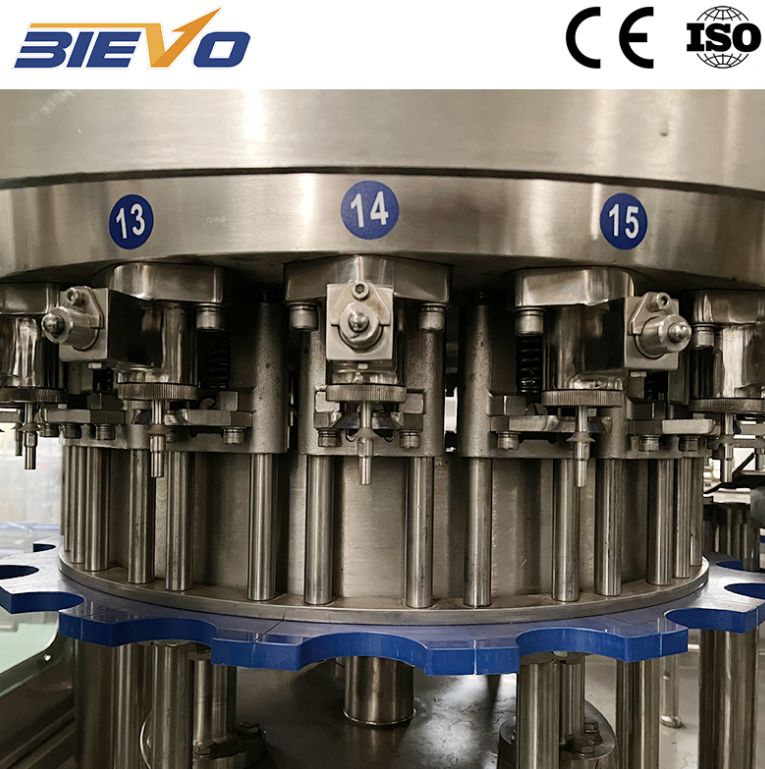
Pre-Shift Visual Inspections and Mechanical Verification
Starting a packaging shift without systematic component verification introduces operational risks across sensitive mechanical assemblies. Operators should begin by examining sanitary seals, pneumatics, and beverage delivery manifolds for physical wear or micro-fractures. Inspecting filling valve stems for sugar syrup buildup prevents mechanical binding during rapid vertical actuation cycles. Pneumatic pressure gauges on main supply lines require verification to ensure operating pressures stay within 0.5 to 0.6 MPa. Deviations in line air pressure affect valve seating forces, leading to liquid weeping or inconsistent container pressurized sealing across production runs. Verifying bottle neck centering guides and inspecting star-wheel pocket inserts ensures smooth bottle entry without axial misalignment, protecting fragile container finishes from structural damage during high-speed continuous transfer operations.
Sanitation Protocols and Sanitizing Loop Inspection
Sanitation rigor directly dictates microbial control and beverage shelf stability over extended distribution periods. Operating an industrial carbonated drink filling machine requires strict adherence to daily Clean-in-Place cycles and thorough external surface washdowns. According to guidelines established by the European Hygienic Engineering and Design Group, improper rinsing of internal beverage contact surfaces leaves organic residue that fosters biofilm formation and destabilizes carbon dioxide equilibrium during filling operations. Daily sanitation checks must confirm CIP fake bottle attachment, verify chemical concentration levels, and monitor return flow rates to prevent cross-contamination.
1.Inspect chemical reservoir concentrations to ensure caustic wash solutions maintain a precise 1.5 percent strength at 75 degrees Celsius for total microbial destruction.
2.Flush sanitary filling valves with hot water for fifteen minutes to eliminate lingering sugar solids before introducing aggressive chemical cleaning agents.
3.Validate sanitizing rinse pressure across all spray nozzles to guarantee total surface coverage without leaving chemical residues inside internal container contact paths.
|
Inspection Area |
Check Frequency |
Critical Parameter |
Potential Failure Impact |
|
Filling Valve Gaskets |
Every Shift Start |
Zero physical tears or residue |
Pressure leakage and fill height variance |
|
CIP Return Pressure |
Post-Clean Cycle |
Minimum 0.20 MPa flow rate |
Residual wash chemicals and product spoilage |
|
Counter-Pressure Sensors |
Mid-Shift Operations |
Transducer accuracy within +/-0.01 MPa |
Foaming, volume errors, and bottle bursting |
|
Seaming / Capping Heads |
Every 4 Hours |
Torque force between 1.2 and 1.8 Nm |
Cap tilt, gas venting, and container leaks |
Counter-Pressure Circuit Integrity and Gas Regulation
Pressurized gas regulation underpins the physical mechanics of carbonated bottling. Carbonated soft drinks require precise equilibrium pressure to prevent dissolved carbon dioxide from breakout during liquid transfer. Daily maintenance involves checking snifting valves, pressure relief manifolds, and carbon dioxide pre-evacuation lines for mechanical obstructions or physical wear. Leaks in the pre-evacuation line allow ambient air into the bottle container, raising total package oxygen and causing rapid taste alteration. Technicians must inspect proportional pressure control valves for diaphragm stiffness and test automatic snifting exhaust ports for blockages caused by airborne particulate matter or syrup crystallization, maintaining a stable processing environment across high-speed packaging sequences.
Field Case Study on Valve Diaphragm Degradation
During an audit at a sparkling beverage plant in Central America, maintenance crews reported recurring liquid foaming and fill volume fluctuations across three filling heads. The line processed high-carbonation beverages at 3.6 volumes of carbonation under demanding environmental conditions. Physical teardown revealed that elastomeric diaphragms inside the counter-pressure valves had developed micro-tears from aggressive daily steam sterilization cycles. These micro-tears allowed subtle gas leakage during the pre-pressurization phase, preventing equalized pressure between the bowl and the bottle before liquid valve opening. Replacing the compromised diaphragms with fluoroelastomer compounds and recalibrating the pneumatic timing sequence completely resolved the foaming issues, restoring fill height accuracy to within plus or minus one millimeter without compromising total throughput.
Lubrication Management for High-Speed Rotary Components
Continuous rotary motion under washdown conditions demands strict lubrication discipline for bearings, lift cylinders, and main drive gears. Excessive water exposure strips grease from rotary turrets, accelerating metal friction and causing premature component failure. Maintenance personnel should execute targeted grease applications using food-grade lubricants certified to NSF H1 standards. Centralized automatic lubrication pumps require daily reservoir level checks and line pressure verification to prevent dry running. Manual grease points on bottle lift pedestals, guide star-wheels, and capping turrets must receive precise grease shots according to manufacturer intervals to prevent over-greasing, which attracts dust and compromises sanitary compliance within critical filling enclosure environments.
Operational Diagnostics and Equipment Upkeep Standards
Sustaining processing stability requires combining daily physical checklists with continuous diagnostic tracking. Tracking daily mechanical performance metrics, such as snifting cycle times, valve actuation speeds, and capping torque variations, allows technicians to detect component degradation before catastrophic failure occurs. Unplanned downtime, container damage, and product scrap decrease significantly when operators follow structured daily procedures rather than relying on reactive repairs. Equipment manufacturing from BIEVO combines precision machining standards with user-friendly maintenance architecture, supporting beverage packaging operations through reliable component accessibility and robust structural performance across intensive, high-throughput production schedules.
Table of Contents
- Pre-Shift Visual Inspections and Mechanical Verification
- Sanitation Protocols and Sanitizing Loop Inspection
- Counter-Pressure Circuit Integrity and Gas Regulation
- Field Case Study on Valve Diaphragm Degradation
- Lubrication Management for High-Speed Rotary Components
- Operational Diagnostics and Equipment Upkeep Standards